How Garden Patios Support Outdoor Living
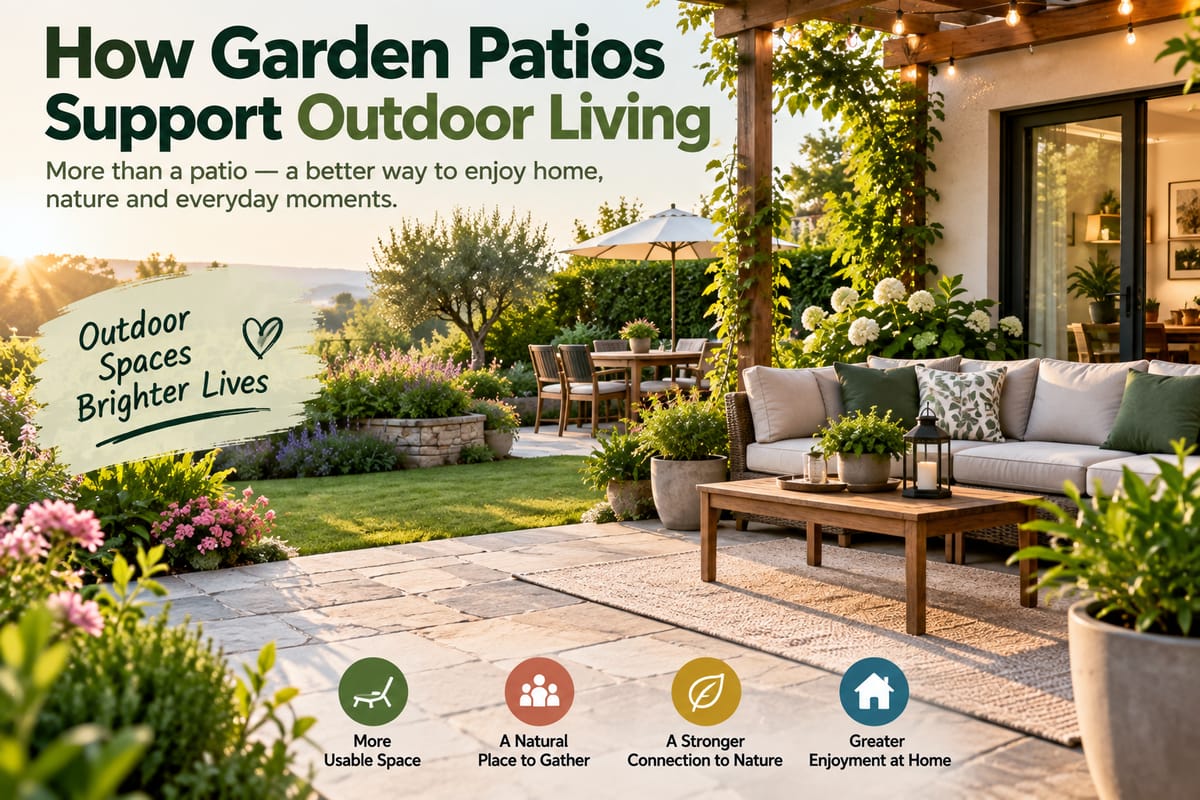
How Garden Patios Support Outdoor Living
A garden patio can transform an outdoor area from an unused patch of space into an extension of the home. Instead of serving only as a place for occasional meals or warm-weather gatherings, a thoughtfully designed patio can support everyday activities such as relaxing, dining, entertaining, gardening, and spending time with family.
As homeowners place greater emphasis on usable outdoor space, patios are becoming an important part of residential landscape design. Their value is not simply about adding a paved surface to a garden. The right patio creates a practical connection between indoor rooms, planting areas, and the activities people want to enjoy outside.
What Makes a Garden Patio Useful?
A patio provides a stable, defined surface within the garden. Unlike grass or loose soil, it can accommodate furniture, outdoor kitchens, dining sets, fire features, planters, and other elements without becoming difficult to use after rain or heavy foot traffic.
The most useful patios are designed around how people actually move through and use the property. A patio located immediately outside a kitchen, for example, can make outdoor dining easier. A more secluded patio surrounded by plants may work better as a quiet sitting area.
This connection between practical space and personal preferences is also part of broader lifestyle design and personal living, where the layout of a home and garden is shaped around everyday routines.
Patios Create Outdoor Rooms
One of the biggest advantages of a patio is its ability to create the feeling of an outdoor room.
Walls are not necessarily required. Changes in paving, planting, furniture arrangement, lighting, pergolas, screens, or changes in elevation can visually define the area. A patio can therefore have its own purpose while remaining connected to the surrounding garden.
For example, a larger patio might contain separate zones for:
- Outdoor dining
- Conversation and seating
- Cooking and food preparation
- Relaxation
- Children’s activities
- Container gardening
- Entertaining guests
Creating these zones can make a relatively modest garden feel more functional without requiring a major increase in its overall size.
Connecting the Home With the Garden
A patio often acts as a transition between indoor and outdoor living.
Large doors or sliding glass doors can create a direct visual and physical connection between an interior living room or kitchen and the patio. When furniture, colors, materials, and landscaping complement one another, the transition can feel more natural.
The relationship between the patio and surrounding landscape matters just as much. Plants can soften hard paving, while garden paths can connect the patio to other parts of the property.
A successful layout should consider the entire outdoor area rather than treating the patio as an isolated feature. This is why learning how to design functional outdoor living spaces around a garden can help homeowners think about circulation, seating, planting, privacy, and practical use together.
Supporting Outdoor Dining
Garden patios are particularly useful for outdoor meals.
A paved surface provides a level foundation for dining tables and chairs, making it easier to create a comfortable eating area. The proximity to the kitchen can also reduce the amount of carrying required when serving food outside.
Depending on the available space, an outdoor dining area might include:
- A dining table and chairs
- A grill or outdoor cooking station
- Storage for outdoor dishes and equipment
- Weather-resistant lighting
- Nearby herb planters
- Shade or overhead protection
Even a small patio can support casual meals when the furniture is appropriately scaled to the space.
Creating Comfortable Relaxation Areas
A patio does not have to be centered around entertaining. It can also provide a dedicated place to slow down and enjoy the garden.
Comfortable chairs, benches, loungers, or compact outdoor sofas can turn a patio into a personal retreat. Nearby planting can provide visual interest and make the area feel more connected to nature.
Furniture placement is important. Seating that faces the garden can encourage people to appreciate plants and landscaping rather than simply looking toward the house.
Lighting can extend the usefulness of the patio into the evening. Soft pathway lighting, wall fixtures, lanterns, or carefully positioned garden lights can improve visibility while creating a more welcoming atmosphere.
Shade Makes Patios More Usable
Sunlight is one of the factors that can determine whether people actually use a patio regularly. A location that receives intense afternoon sun may become uncomfortable during the hottest part of the day.
Shade can be provided in several ways, including:
- Pergolas
- Retractable awnings
- Shade sails
- Umbrellas
- Covered structures
- Trees and larger plants
The choice depends on the property’s layout, climate, maintenance requirements, and desired appearance. Homeowners can explore how shade structures improve outdoor spaces when considering ways to make patios more comfortable throughout the day.
Natural shade from trees can also contribute to the character of the garden while helping integrate the patio into the surrounding landscape.
Choosing Patio Materials
The patio surface affects both appearance and usability.
Common options include natural stone, concrete, brick, porcelain paving, and other outdoor-rated materials. Each has different characteristics related to cost, maintenance, durability, appearance, and installation.
The material should also work with the existing architecture and landscape. A contemporary home might pair naturally with large-format paving, while a traditional property may suit brick or natural stone.
Texture and surface characteristics are important as well. Outdoor paving should be appropriate for the local conditions and practical for walking, furniture placement, and maintenance.
Designing Around Weather
Outdoor living areas have to accommodate changing weather conditions.
Rainfall, intense sunlight, wind, temperature changes, and humidity can all affect how comfortable a patio is and how long its furniture and finishes last.
Good drainage is particularly important. Water should be directed away from buildings and should not collect around furniture or create persistent wet areas.
Weather-resistant materials and furniture can also reduce maintenance. Outdoor cushions, fabrics, and wooden furniture may require additional protection depending on the local climate.
Adding Plants Around the Patio
A patio can be surrounded by plants without becoming difficult to maintain.
Low-growing borders, raised beds, container plants, shrubs, and trees can soften hard edges and provide a stronger connection to the garden. Plants can also be used to create privacy or define different areas.
However, planting should be planned carefully. Trees with aggressive root systems may not be appropriate immediately beside paving, while plants that shed heavily may increase cleaning requirements.
Container gardening provides another option. Pots can introduce seasonal color and greenery without permanently changing the landscape.
Supporting Entertaining
Patios can make entertaining at home more practical by providing a dedicated gathering area.
A well-planned space can accommodate small family meals, weekend gatherings, celebrations, or informal conversations with friends. Seating can be arranged to encourage interaction without blocking pathways.
Outdoor entertaining does not necessarily require a large patio. Flexible furniture and thoughtful zoning can allow a smaller area to serve several purposes.
The growing interest in outdoor living projects reflects how homeowners are increasingly looking for ways to make exterior areas more useful rather than treating gardens solely as decorative spaces.
Making Small Patios Work Harder
Limited outdoor space does not mean a patio cannot support several activities.
Multifunctional furniture can help. Benches with storage, folding chairs, extendable tables, and movable planters allow the layout to change when needed.
Vertical elements can also provide benefits without consuming much floor space. Trellises, climbing plants, wall-mounted lighting, and narrow planters can add character while preserving walking and seating areas.
Keeping the design visually simple can make a small patio feel less crowded. Too many furniture pieces, decorations, or large containers can quickly reduce usable space.
Privacy and Personal Comfort
Privacy can influence whether homeowners feel comfortable using their patios regularly.
Depending on the property, privacy can be improved with hedges, trees, trellises, screens, fencing, pergolas, or carefully positioned planting.
The goal does not always need to be complete separation from neighboring properties. Partial screening can create a sense of enclosure while still allowing sunlight and airflow.
Plants can be particularly useful because they provide privacy while contributing to the overall appearance of the garden.
Safety and Accessibility
A patio should also be easy and safe to navigate.
Clear walking routes, stable paving, adequate lighting, and appropriate transitions between surfaces can make the space more accessible. Steps and changes in elevation should be planned carefully, particularly where children, older adults, or people with mobility limitations regularly use the area.
Furniture should not obstruct major pathways, and outdoor electrical installations should be designed appropriately for exterior conditions.
These practical details may receive less attention than decorative features, but they can have a major effect on whether a patio remains useful over time.
A Patio as Part of the Larger Landscape
The most successful garden patios are rarely designed independently from the rest of the property.
The patio should relate to pathways, planting beds, lawns, trees, outdoor structures, and the home’s architecture. Materials can be repeated across different areas to create visual continuity, while plants can help transition between hard surfaces and softer garden spaces.
A patio can therefore serve as the central platform from which the rest of an outdoor living area develops.
Rather than simply adding paving, homeowners can think about what they want the garden to support: morning coffee, family meals, reading, entertaining, gardening, relaxing, or spending time outdoors after work.
Designing for Everyday Outdoor Living
A garden patio becomes more valuable when it reflects the way people actually live.
The best design is not necessarily the largest or most expensive one. It is the space that makes outdoor activities convenient, comfortable, and enjoyable while fitting naturally into the surrounding garden.
By combining appropriate paving, comfortable furniture, shade, lighting, planting, privacy features, and practical circulation, a patio can become a genuine extension of the home. It can provide a flexible outdoor setting that works for quiet personal moments as well as social occasions, while helping the garden function as a living part of the property rather than simply an area surrounding the house.