How Home Fire Safety Works
How Home Fire Safety Works
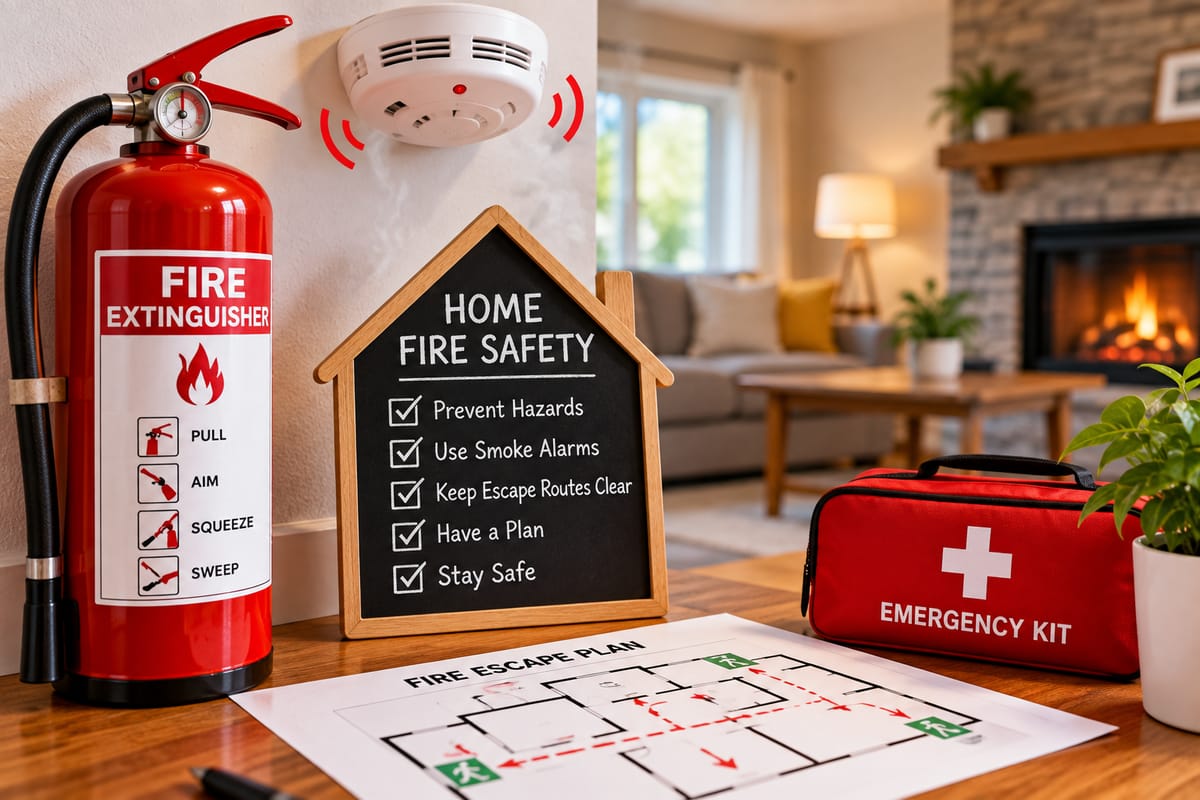
Home fire safety is built around a simple principle: reduce the chances of a fire starting, detect a fire quickly if one occurs, and make sure everyone can get outside safely.
A home can contain many potential ignition sources, including cooking equipment, electrical systems, heating appliances, fireplaces, candles, and batteries. Most household fires are preventable or their consequences can be reduced when residents understand these risks and maintain basic safety measures.
Effective fire safety is therefore not one device or one rule. It is a combination of prevention, detection, preparation, maintenance, and emergency response.
What Home Fire Safety Means
Home fire safety covers the measures used to prevent fires and protect people and property when a fire occurs.
A practical home fire-safety plan includes:
- Identifying common fire hazards
- Maintaining electrical and heating equipment
- Installing smoke alarms
- Using carbon monoxide detectors where appropriate
- Keeping escape routes accessible
- Storing flammable materials safely
- Practicing an evacuation plan
- Knowing when and how to use a fire extinguisher
- Maintaining major household systems
- Responding quickly to warning signs
The goal is not to make a home completely risk-free. Instead, it is to reduce preventable hazards and improve the household’s ability to respond to an emergency.
How House Fires Start
A fire generally requires three basic elements: heat, fuel, and oxygen.
Heat can come from an electrical fault, open flame, cooking appliance, heating equipment, or another ignition source. Fuel can include paper, fabrics, furniture, cooking oils, wood, plastics, and other combustible materials.
When these elements come together under suitable conditions, combustion can begin and spread.
Removing one part of this combination can prevent a fire from starting or help stop it from spreading.
Common Sources of Home Fires
Different areas of a home present different fire risks.
Common sources include:
- Cooking equipment
- Electrical faults
- Space heaters
- Fireplaces
- Candles
- Smoking materials
- Clothes dryers
- Faulty appliances
- Extension cords and power strips
- Portable batteries and charging equipment
- Grills and outdoor cooking equipment
The specific risks vary depending on the home’s design, appliances, heating systems, and occupants.
Understanding the broader range of household hazards can help homeowners identify problems before they become emergencies. The guide on How to Identify and Prevent Common Safety Hazards Inside a Home provides a broader framework for recognizing these risks.
Why Kitchen Safety Matters
Cooking is one of the most important areas to consider when developing a home fire-safety routine.
Cooking fires can begin when food, grease, cookware, or nearby combustible materials become overheated.
Practical precautions include:
- Staying in the kitchen when actively cooking
- Keeping towels and other combustible materials away from burners
- Keeping pot handles turned away from the edge of the stove
- Cleaning grease buildup
- Turning appliances off when finished
- Keeping children away from active cooking areas
- Maintaining cooking appliances properly
If a cooking fire occurs, avoid moving a burning pan around the home. The appropriate response depends on the type and size of the fire, and everyone should prioritize getting away safely and contacting emergency services when necessary.
Electrical Safety Helps Prevent Fires
Electrical systems can become a fire hazard when components are overloaded, damaged, improperly installed, or poorly maintained.
Warning signs can include:
- Frequently tripped circuit breakers
- Flickering lights
- Burning smells near outlets
- Discolored switches or outlets
- Warm or buzzing outlets
- Damaged cords
- Loose plugs
- Sparks
- Repeated electrical failures
Homeowners should not ignore persistent electrical problems.
The How Residential Electrical Systems Work and Stay Safe guide explains how residential electrical systems function and why proper maintenance matters.
Electrical repairs that require specialized knowledge should be handled by a qualified professional rather than improvised.
Avoid Overloading Electrical Outlets
Plugging too many devices into a single outlet or power strip can create excessive electrical demand.
High-power appliances such as heaters, cooking equipment, and some household machinery may require substantial electrical capacity.
Avoid using damaged extension cords or connecting multiple extension cords together. Power strips should not be treated as a substitute for properly designed permanent wiring.
If an outlet or circuit cannot safely support the required load, the problem should be addressed through appropriate electrical work.
Heating Equipment Requires Attention
Heating equipment can become dangerous when it is damaged, improperly installed, or placed too close to combustible materials.
Portable heaters should be positioned on stable surfaces and kept away from curtains, bedding, furniture, clothing, and other materials that could ignite.
Heating systems should also receive appropriate maintenance according to the manufacturer’s recommendations.
Before using a heating appliance, check for visible damage and make sure ventilation requirements are satisfied.
Fireplaces and Wood-Burning Appliances
Fireplaces and wood-burning stoves can provide heat but also introduce open flames, hot surfaces, embers, and combustible materials into the home.
Good maintenance practices may include:
- Keeping combustible objects away from the fire
- Using appropriate screens or protective barriers
- Cleaning chimneys and flues as necessary
- Removing ashes safely
- Inspecting the appliance and surrounding structure
- Following manufacturer instructions
Ashes can remain hot for considerably longer than they appear to be, so they should be handled and stored carefully.
Clothes Dryers Need Regular Maintenance
Clothes dryers can accumulate lint, particularly in filters and ventilation systems.
Lint is combustible, making regular cleaning important.
After each use, clean the lint filter according to the appliance instructions. Periodically inspect the dryer vent and exhaust system for accumulated lint, restricted airflow, or other problems.
A dryer that takes unusually long to dry clothes may indicate a ventilation or maintenance issue that deserves attention.
Smoke Alarms Provide Early Warning
Smoke alarms are among the most important fire-safety devices in a home.
Their primary purpose is to detect smoke and provide an early warning so occupants have more time to escape.
Smoke alarms should generally be installed in appropriate locations throughout the home, including near sleeping areas and on each level, following applicable local requirements and manufacturer guidance.
Residents should test alarms regularly and replace batteries or entire units according to the manufacturer’s instructions.
Why Smoke Alarm Placement Matters
A smoke alarm can only provide useful warning if it can detect smoke and occupants can hear it.
Alarms should not be hidden behind furniture, obstructed, or installed in locations where normal household conditions could interfere with their operation.
Homes with multiple floors may benefit from interconnected alarms, where a detected fire can cause several alarms to sound.
The specific installation requirements depend on the type of home, local building and fire-safety regulations, and the alarm manufacturer’s instructions.
Carbon Monoxide Is a Different Hazard
Carbon monoxide is a poisonous gas that can be produced when fuels such as gas, oil, wood, or other combustible materials do not burn properly.
Unlike smoke, carbon monoxide cannot be reliably detected by sight or smell.
This makes carbon monoxide detectors an important safety measure in homes where fuel-burning appliances or other relevant sources are present.
The How Do Carbon Monoxide Detectors Work? guide explains how these devices detect the gas and provide warnings.
Keep Escape Routes Clear
A fire can make familiar spaces difficult to navigate.
Smoke can reduce visibility, while heat and flames can make certain rooms or hallways inaccessible.
For this reason, escape routes should remain clear of boxes, furniture, stored belongings, and other obstacles.
Doors and windows designated as emergency exits should be usable, and household members should know how to reach a safe location outside.
Create a Home Fire Escape Plan
Every household should have a basic evacuation plan.
The plan should identify:
- Primary exits
- Alternative exits
- A safe meeting location outside
- How to alert other household members
- How to contact emergency services
- Special assistance needs
- Procedures for children or people who may need help evacuating
Everyone should understand the plan rather than relying on one household member to direct the evacuation during an emergency.
Practice the Escape Plan
Knowing an escape plan on paper is different from practicing it.
A household can conduct occasional drills to identify problems such as blocked exits, unfamiliar routes, or difficulty hearing alarms.
Practice can also help children become familiar with what to do when an alarm sounds.
The objective is to develop a simple response that people can follow even when they are frightened or disoriented.
Have a Designated Meeting Point
Choose a safe location outside the home where everyone should meet after evacuating.
This could be a particular tree, mailbox, neighboring property, or another location safely away from the building.
A designated meeting point helps household members determine quickly whether everyone has escaped.
Nobody should re-enter a burning building simply to look for someone who is missing. Emergency responders should be informed about anyone who may still be inside.
Understand the Role of Fire Extinguishers
A fire extinguisher can sometimes be useful for a small, contained fire when a person has a clear escape route and knows how to operate the extinguisher.
However, an extinguisher should never become a reason to delay evacuation.
Different extinguishers are designed for different classes of fire. Using the wrong type can be ineffective or dangerous.
Households should select extinguishers appropriate for the risks present in their home and understand their instructions before an emergency occurs.
Know When Not to Fight a Fire
A fire can grow extremely quickly.
If flames are spreading, smoke is heavy, the fire is larger than a person can safely handle, or there is no clear escape route, evacuation should take priority.
People should not attempt to fight a fire simply because an extinguisher is nearby.
The safest response is often to leave immediately, close doors behind you if possible without delaying escape, and contact emergency services.
Store Flammable Materials Carefully
Paints, solvents, fuels, cleaning chemicals, aerosols, and other flammable materials should be stored according to their labels and applicable safety requirements.
Keep such materials away from ignition sources and heat.
Never transfer chemicals into containers that could be mistaken for food or drink containers.
Proper storage reduces the chance that an accidental spark, flame, or heat source will ignite combustible material.
Keep Combustible Items Away From Heat
Furniture, curtains, bedding, clothing, paper, and other combustible items should be kept at a safe distance from heating appliances and open flames.
This is particularly important around portable heaters, fireplaces, stoves, candles, and other sources of concentrated heat.
A simple change in placement can sometimes eliminate a significant hazard.
Maintain Major Home Systems
Fire safety is closely connected to the condition of the home’s major systems.
Plumbing problems can contribute to water damage, electrical systems can create ignition hazards when defective, and heating or ventilation equipment may require regular maintenance.
Understanding how these systems operate makes it easier to recognize unusual conditions and arrange appropriate maintenance.
The How Major Home Systems Work and What Homeowners Maintain guide provides a broader overview of the systems homeowners commonly need to monitor.
Be Careful With Candles and Open Flames
Candles should never be left unattended.
Keep them away from curtains, paper, bedding, decorations, and other combustible materials. Place them on stable, heat-resistant surfaces where they are unlikely to be knocked over.
Extinguish candles completely before leaving the room or going to sleep.
Where practical, battery-powered alternatives can provide decorative lighting without an open flame.
Use Grills Safely
Outdoor grills should be positioned away from buildings, combustible structures, and materials that could catch fire.
Never bring outdoor grills designed for use outside into enclosed spaces unless the appliance is specifically designed and approved for that environment.
Charcoal, propane, and other fuel sources each have specific safety requirements. Follow the manufacturer’s instructions and allow hot materials to cool appropriately before disposal.
Pay Attention to Batteries and Charging Devices
Rechargeable batteries and electronic devices should be used and charged according to manufacturer instructions.
Damaged, swollen, unusually hot, or otherwise abnormal batteries should not be ignored.
Avoid using damaged chargers or cables, and use compatible charging equipment.
Devices should be placed on appropriate surfaces while charging rather than underneath bedding or other materials that can trap heat.
Make Fire Safety Accessible to Everyone
A fire-safety plan should account for the people who live in the home.
Young children, older adults, people with mobility limitations, and anyone who may have difficulty hearing an alarm may require additional planning.
Consider:
- Whether alarms can be heard from sleeping areas
- Whether exits are physically accessible
- Whether someone needs assistance evacuating
- Whether children understand the escape plan
- Whether emergency contact information is readily available
The safest plan is one designed around the actual household rather than a generic assumption about who will be present.
Review Fire Safety After Home Changes
Home renovations and changes in household routines can alter fire risks.
Adding a new appliance, changing the electrical system, installing heating equipment, converting a room, or changing sleeping arrangements may require the fire-safety plan to be reconsidered.
After major home improvements, check that smoke alarms, escape routes, electrical systems, and other safety measures remain appropriate.
Make Fire Safety a Routine
Home fire safety works best when it becomes part of ordinary home maintenance rather than something considered only after an emergency.
Test alarms. Keep exits clear. Maintain appliances. Inspect electrical systems when problems appear. Store combustible materials appropriately. Review the escape plan periodically.
These actions may seem small individually, but together they can reduce preventable hazards and improve a household’s ability to respond quickly.
Building a Safer Home Over Time
A fire-safe home is not created by purchasing a single device. It develops through layers of protection.
Preventive maintenance reduces the likelihood of fires. Smoke alarms provide early warning. Carbon monoxide detectors address a separate invisible hazard. Clear escape routes give occupants a way out, while a practiced evacuation plan helps turn an emergency into a structured response.
Homeowners who combine these measures with regular maintenance can create a safer environment without making everyday life unnecessarily complicated. The most effective approach is consistent: identify hazards, maintain the systems that can create them, detect problems early, and make sure everyone knows how to get to safety.