How Spice Blends Differ Around the World
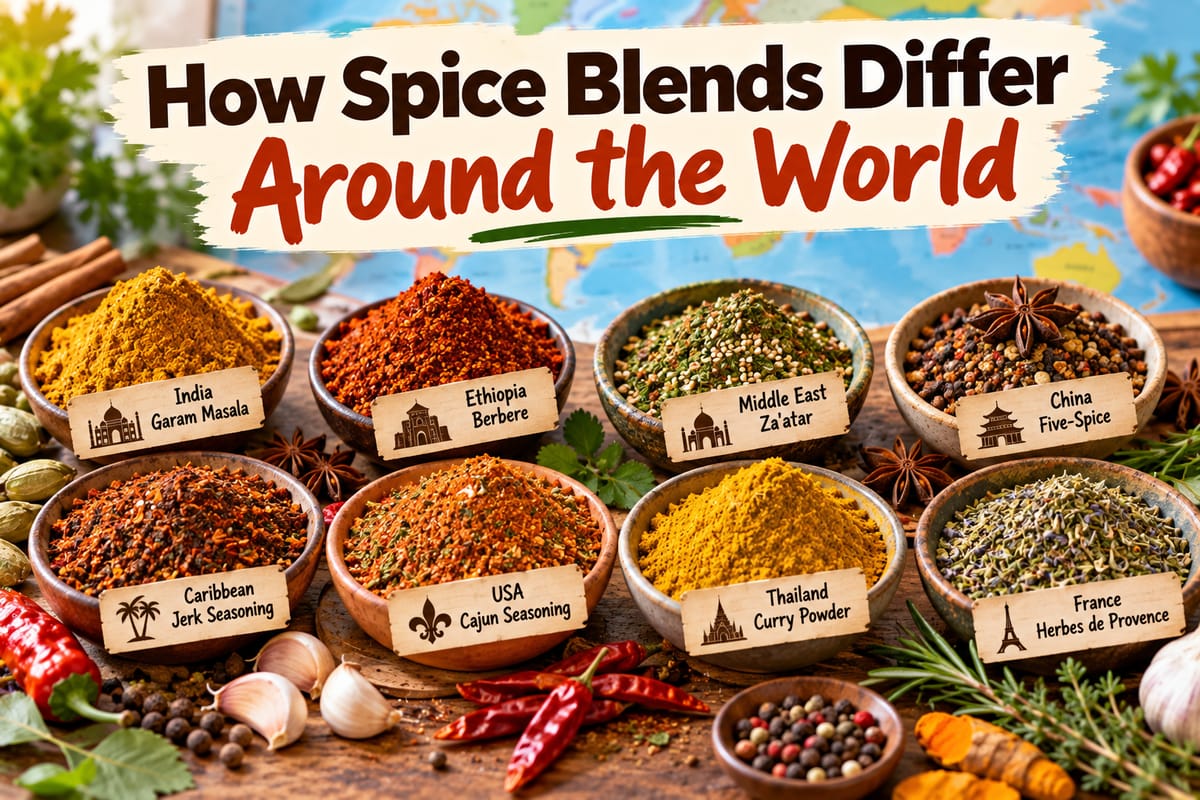
How Spice Blends Differ Around the World
Spice blends are among the clearest examples of how geography, history, agriculture, trade, and culture shape the way people cook. The same basic ingredients—such as cumin, coriander, chili, pepper, ginger, cinnamon, or turmeric—can be combined in dramatically different ways depending on where a dish comes from.
A spice blend is more than a convenient mixture of seasonings. It can reflect local crops, centuries of trade, religious traditions, preservation techniques, cooking methods, and regional preferences. Some blends are designed primarily for curries and stews, while others are used for grilled meats, rice dishes, soups, vegetables, sauces, or even beverages.
Understanding these differences can make everyday cooking more interesting because it reveals why similar ingredients can produce completely different flavors. It also helps home cooks choose, store, substitute, and use spices more confidently.
For a broader understanding of how individual ingredients function in recipes, the Cooking Ingredients Guide: Types, Uses, Substitutions & Storage provides useful background on the roles and handling of different cooking ingredients.
What Is a Spice Blend?
A spice blend is a combination of two or more dried spices, herbs, seeds, roots, or other flavoring ingredients that are mixed together for use in cooking.
Some blends contain only a few ingredients. Others may include a dozen or more components, each contributing a particular aroma, taste, color, heat level, or texture.
Spice blends can be:
- Whole-spice mixtures, where ingredients remain largely intact until cooking
- Ground blends, where spices are milled into a powder
- Toasted blends, where ingredients are heated before being combined
- Freshly prepared mixtures, which may include herbs, chilies, garlic, or ginger
- Commercial blends, which are manufactured and packaged for convenience
- Traditional regional blends, whose recipes vary between households and communities
The proportions matter as much as the ingredients themselves. A blend containing cumin and coriander, for example, can taste very different depending on whether cumin dominates or both spices are used in roughly equal amounts.
Why Spice Blends Differ From Region to Region
There is no universal formula for creating a spice blend. Regional differences develop for several reasons.
Local Agriculture
Historically, cooks often relied on ingredients that were readily available in their environment.
Regions where certain herbs, seeds, roots, or peppers grew easily developed culinary traditions around those ingredients. Where an ingredient was difficult to obtain, cooks might use a local substitute or develop a completely different flavor profile.
This helps explain why cuisines separated by thousands of miles can have very different approaches to seasoning.
Climate and Food Preservation
Spices have historically played roles beyond flavor. Some ingredients were useful in preserving foods, while strongly aromatic seasonings could make preserved or dried foods more appealing.
Hot, humid environments also influenced food preparation and storage practices. Ingredients that could be dried and stored for long periods became particularly valuable.
Trade and Migration
Spice traditions were also shaped by movement.
Merchants carried spices across continents, while migration introduced ingredients and cooking techniques to new communities. As spices moved from one region to another, local cooks incorporated them into existing culinary traditions.
The result was not simply a copy of the original recipe. Imported ingredients were adapted to local tastes and combined with native foods.
Religion and Cultural Traditions
Religious and cultural practices can influence which ingredients are commonly used and how food is prepared.
Some culinary traditions emphasize particular combinations of spices for ceremonial dishes, while others avoid certain ingredients. Over generations, these practices become part of regional food identity.
Cooking Techniques
The same spice can behave differently depending on how it is prepared.
A spice may be toasted, fried in oil, added to a simmering sauce, mixed into a marinade, or sprinkled over food near the end of cooking. Each method extracts different aromas and changes the overall character of the blend.
This is one reason understanding How to Season Food With Herbs, Spices, Salt and Other Flavors can be just as important as knowing which spices are in a particular mixture.
Garam Masala: A Flexible Indian Spice Tradition
Garam masala is one of the best-known spice blends associated with Indian cooking, but there is no single universal garam masala recipe.
Depending on the region and household, a mixture may include combinations of:
- Cumin
- Coriander
- Cardamom
- Cinnamon
- Cloves
- Black pepper
- Bay leaves
- Nutmeg
- Mace
Some versions are toasted before grinding, while others emphasize particular aromatic spices.
The name is often interpreted in relation to warming qualities rather than simply physical heat. A garam masala does not necessarily need to be intensely spicy. Its purpose can be to create warmth, fragrance, complexity, and depth.
Different Indian regions have their own approaches to seasoning, which means two garam masalas can taste noticeably different even when they share several ingredients.
Curry Powder and the Idea of a Blended Curry Flavor
Curry powder is another example of how spice blends can change as culinary traditions travel.
There is no single spice mixture that represents every curry tradition. In fact, many South Asian cooks do not rely on one universal powder called curry powder. Instead, they may prepare specific combinations for particular dishes.
Commercial curry powders became especially important outside South Asia, where manufacturers created standardized blends designed to provide a recognizable curry-style flavor.
Depending on the formulation, curry powder can contain:
- Turmeric
- Coriander
- Cumin
- Fenugreek
- Mustard
- Chili
- Ginger
- Black pepper
The balance of these ingredients determines whether the mixture is earthy, bitter, warm, citrusy, sweet, or hot.
Chinese Five-Spice: A Study in Balance
Chinese five-spice is built around a very different concept of flavor balance.
Common versions contain:
- Star anise
- Fennel seed
- Cinnamon or cassia
- Cloves
- Sichuan pepper
The exact formulation can vary, but the blend is strongly aromatic and often associated with roasted meats, marinades, braises, and other savory dishes.
Its distinctive character comes from the interaction of sweet, warm, floral, pungent, and numbing or tingling notes.
Unlike a simple chili-based seasoning, five-spice does not depend primarily on heat. Its complexity comes from combining ingredients with contrasting aromatic characteristics.
Za’atar and the Eastern Mediterranean
Za’atar demonstrates how a spice blend can be closely connected to regional herbs and culinary identity.
Many versions contain a combination of dried za’atar herb or related herbs, sumac, sesame seeds, and salt. Recipes vary considerably by location and household.
Sumac contributes a tart, lemon-like quality, while sesame adds nuttiness and texture. The herb component provides an earthy aroma.
Za’atar can be sprinkled over flatbreads, mixed with olive oil, used with vegetables, or incorporated into other dishes.
Its flavor profile illustrates an important principle of spice blending: a successful mixture does not need to rely on intense heat. Acidity, nuttiness, herbal notes, and salt can work together to create complexity.
Ras el Hanout in North African Cooking
Ras el hanout is associated particularly with North African cuisine and is known for its complex combination of spices.
There is no single fixed recipe. Blends can contain numerous ingredients, potentially including:
- Cumin
- Coriander
- Cinnamon
- Ginger
- Turmeric
- Cardamom
- Black pepper
- Nutmeg
- Cloves
- Allspice
Some blends may contain many more components.
The name is commonly associated with the idea of the best or top selection from a spice merchant’s assortment. This reflects the broader role that spice mixtures have played in North African food culture.
Ras el hanout can be used in tagines, couscous, rice dishes, vegetables, and meat preparations. Its complexity makes it particularly useful when a dish needs several layers of aroma without adding each spice individually.
Berbere and the Bold Flavors of Ethiopia and Eritrea
Berbere is a prominent spice blend in Ethiopian and Eritrean cooking. It is often associated with a bold combination of chili and aromatic spices.
Depending on the recipe, ingredients may include:
- Dried chili peppers
- Paprika
- Fenugreek
- Coriander
- Cumin
- Cardamom
- Cinnamon
- Cloves
- Ginger
- Black pepper
The balance varies, and the resulting mixture can range from deeply aromatic to distinctly hot.
Berbere is commonly associated with dishes such as stews and sauces, where its spices have time to integrate into the cooking liquid.
Its use demonstrates how a spice blend can function almost like a foundation ingredient rather than a finishing seasoning.
Jerk Seasoning and Caribbean Flavor
Jerk seasoning from Jamaica demonstrates another approach to blending spices.
Jerk preparations commonly combine ingredients such as allspice, thyme, chili peppers, garlic, ginger, and other seasonings. Fresh ingredients are often important in jerk marinades, meaning the tradition cannot always be reduced to a dry spice powder.
Allspice is particularly characteristic, contributing warm, clove-like and slightly peppery notes.
Jerk seasoning is closely connected to grilling and smoking techniques. The seasoning therefore interacts with heat, smoke, caramelization, and the natural flavors of meat or vegetables.
This shows why a spice blend cannot always be understood separately from the cooking method it accompanies.
Cajun and Creole Seasoning in the United States
Louisiana’s Cajun and Creole food traditions demonstrate how regional American spice blends developed from multiple culinary influences.
Commercial Cajun-style seasoning blends commonly include combinations of:
- Paprika
- Garlic
- Onion
- Black pepper
- Cayenne
- Oregano
- Thyme
- Salt
The proportions vary significantly between products and recipes.
These seasonings are often used with seafood, chicken, rice dishes, vegetables, soups, and stews. The balance between salt, herbs, pepper, and chili can produce anything from relatively mild seasoning to substantial heat.
The broader lesson is that regional spice blends often become recognizable not because they contain completely unique ingredients, but because familiar ingredients are combined in a distinctive proportion.
Shichimi Togarashi in Japan
Japanese cuisine offers another interesting example with shichimi togarashi, a traditional seven-spice mixture.
The ingredients vary, but blends can include chili pepper, citrus peel, sesame seeds, Japanese pepper, hemp or poppy seeds, and other aromatic components.
Rather than functioning solely as a base seasoning, shichimi togarashi is frequently used as a finishing condiment.
It can add heat, citrus aroma, nuttiness, and fragrance to foods such as noodles, soups, rice dishes, and grilled preparations.
Its relatively small quantities can have a noticeable effect because several different sensory characteristics arrive together.
Herbes de Provence and French Herb Blends
Not every regional blend is dominated by warming spices.
Herbes de Provence is associated with the herbs of southern French cooking and may contain combinations of thyme, rosemary, oregano, savory, basil, marjoram, or other herbs depending on the blend.
The flavor is primarily herbal and aromatic rather than hot.
This highlights the broader meaning of seasoning blends. A blend does not have to contain chili, pepper, or strongly pungent spices to transform food.
Fresh or dried herbs can provide equally important layers of aroma.
Za’atar, Garam Masala and Five-Spice Show Different Ideas of Balance
Comparing these blends reveals how different food cultures approach flavor.
| Spice blend | Common flavor characteristics | Typical role |
|---|---|---|
| Garam masala | Warm, aromatic, earthy | Curries, meats, vegetables |
| Chinese five-spice | Sweet, aromatic, pungent | Braises, marinades, roasted foods |
| Za’atar | Herbal, tangy, nutty | Breads, vegetables, dips |
| Ras el hanout | Complex, warm, floral | Tagines, couscous, stews |
| Berbere | Spicy, aromatic, earthy | Stews, sauces, meat dishes |
| Jerk seasoning | Spicy, aromatic, herbal | Marinades, grilled foods |
| Shichimi togarashi | Spicy, citrusy, nutty | Finishing seasoning |
| Herbes de Provence | Herbal, fragrant | Roasted foods, vegetables, sauces |
The table also shows why substituting one blend for another does not necessarily produce the same result. Even when two mixtures contain some of the same ingredients, their proportions and intended uses may be completely different.
Why the Same Spice Tastes Different in Different Blends
Individual spices rarely exist in isolation once they enter a blend.
Cumin, for example, can taste earthy and warm. Coriander can contribute citrus-like and floral notes. Cinnamon can add sweetness and warmth. Chili can introduce heat. Sumac can provide acidity.
When these ingredients are combined, their characteristics interact.
The final flavor depends on:
- Ingredient selection
- Ingredient proportions
- Freshness
- Grinding
- Toasting
- Cooking temperature
- Cooking time
- Fat or liquid used
- The other ingredients in the dish
- When the blend is added
This is why simply identifying the ingredients in a spice blend does not tell the whole story.
Whole Spices Versus Ground Blends
The physical form of spices can also influence flavor.
Whole spices generally retain their aromatic compounds longer because less surface area is exposed to air. Grinding increases surface area and makes spices easier to distribute throughout a dish, but it can also accelerate the loss of volatile aromas over time.
Some cooks therefore toast and grind spices immediately before use.
Others prefer commercial ground blends because they are convenient and provide consistent results.
Neither approach is automatically better for every situation. The appropriate choice depends on the recipe, available time, storage conditions, and desired flavor.
How Toasting Changes a Spice Blend
Toasting can dramatically change the aroma of certain spices.
Dry heat can intensify nutty, roasted, and aromatic characteristics. Seeds such as cumin and coriander may become more fragrant after brief heating.
However, spices can burn quickly. Excessive heat may produce bitter or unpleasant flavors.
A cook therefore needs to distinguish between gently awakening the aroma of a spice and overheating it.
This is another example of why seasoning is not simply about adding ingredients. Cooking technique influences the final result.
How Spice Blends Affect Flavor Balance
A successful spice blend usually contributes more than one sensory characteristic.
For example, a blend might combine:
- Heat from chili
- Earthiness from cumin
- Sweetness and warmth from cinnamon
- Floral notes from cardamom
- Acidity from sumac
- Nuttiness from sesame
- Herbal freshness from thyme
- Pungency from black pepper
The goal is not necessarily to make every characteristic equally strong.
Instead, particular flavors may be emphasized while others provide background support.
This is why How Seasoning Changes Flavor and Balance in Home Cooking is an important concept for anyone learning to work with spice mixtures.
Can You Substitute One Spice Blend for Another?
Sometimes, but substitutions should be approached carefully.
A replacement blend may contain several of the same spices while still producing a noticeably different result. It may be hotter, saltier, sweeter, more herbal, or more aromatic.
When substituting, consider the flavor role of the original blend.
If a recipe calls for a warm aromatic mixture, replacing it with a strongly chili-based seasoning could overwhelm the dish. Likewise, replacing an acidic and herbal blend with a sweet spice mixture would change the balance considerably.
A better approach is to identify the dominant characteristics and recreate them using individual spices when possible.
Making Your Own Spice Blends at Home
Homemade spice blends give cooks control over proportions and freshness.
A basic process involves:
- Selecting compatible spices.
- Checking their freshness and aroma.
- Toasting whole spices when appropriate.
- Allowing toasted spices to cool.
- Grinding them to the desired texture.
- Combining them in measured proportions.
- Labeling the mixture with its name and preparation date.
- Storing it in an airtight container.
Beginners do not need to start with complicated formulas. A simple three- or four-spice combination can be an excellent way to understand how individual ingredients interact.
The broader fundamentals covered in The Complete Guide to Cooking for Beginners can also help new cooks build confidence with measuring, heat control, ingredient preparation, and basic seasoning.
Storing Spice Blends Properly
Even an excellent blend can lose quality if it is stored poorly.
Spices generally benefit from being kept:
- In airtight containers
- Away from direct sunlight
- Away from excessive heat
- Away from moisture
- Away from strong odors
- In a convenient but relatively cool cupboard
Whole spices often retain their aroma longer than ground spices, although storage conditions make a major difference.
It is also useful to label homemade blends. Without a name and date, several similar-looking powders can quickly become difficult to identify.
Why Spice Blends Are More Than Recipes
Regional spice blends tell stories about food traditions.
They reveal which plants were cultivated locally, which ingredients arrived through trade, how communities adapted imported foods, and how generations of cooks developed preferences around aroma, heat, acidity, sweetness, and texture.
Two cuisines may use the same cumin or coriander but place those ingredients in completely different culinary contexts. One may toast them before grinding, another may fry them in oil, and another may use them primarily as a finishing seasoning.
That variety is what makes spice blends so useful in the kitchen. They provide a practical way to explore different culinary traditions without requiring an entirely different pantry for every recipe.
For home cooks, learning how these mixtures differ also encourages a more flexible approach to seasoning. Instead of treating a spice blend as a mysterious powder, it becomes possible to understand what each component contributes and how the blend fits into the dish.
Once that perspective develops, experimenting with spices becomes less about following a fixed formula and more about understanding how aroma, heat, acidity, sweetness, bitterness, and texture can work together to create balanced food.