How Sunlight Affects Plant Growth in Gardens
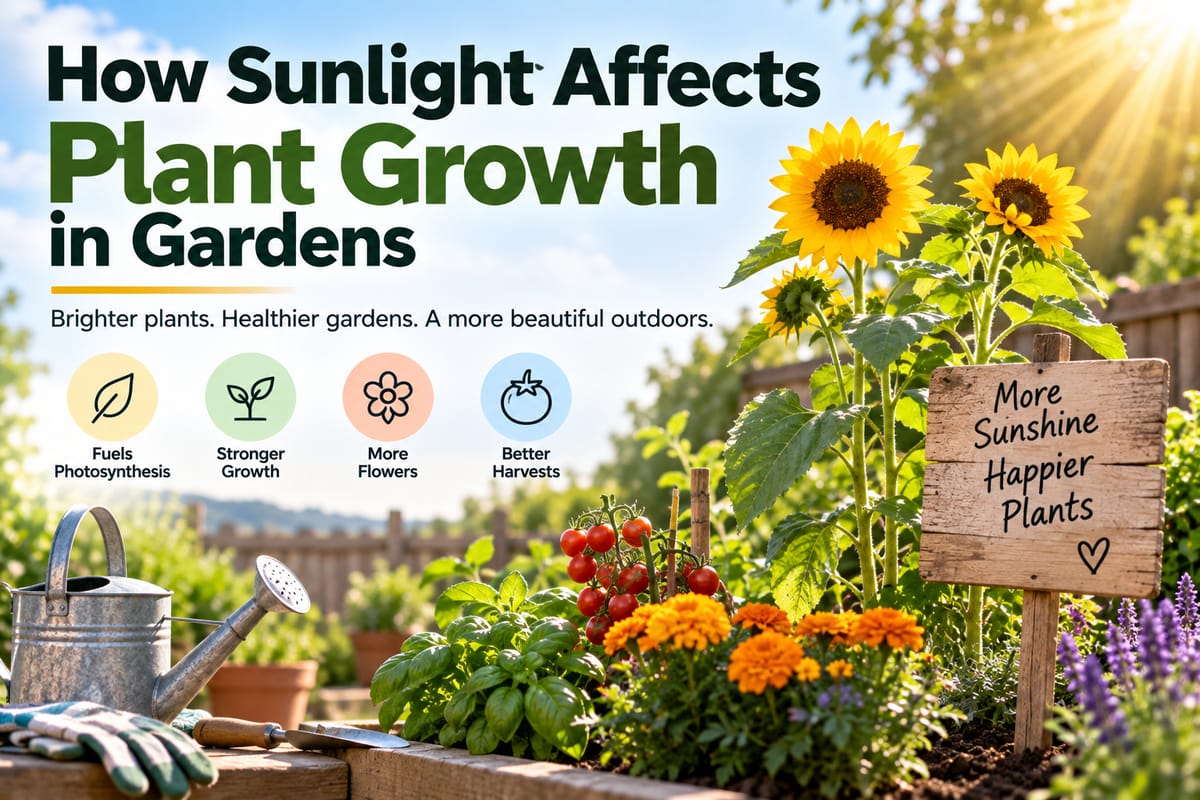
How Sunlight Affects Plant Growth in Gardens
Sunlight is one of the most important factors influencing how plants grow, develop, flower, and produce food. While water and healthy soil receive much of the attention in gardening, even a well-watered and carefully fertilized plant can struggle when it does not receive the right amount of light.
Different plants have different light requirements. Some thrive under hours of direct sunshine, while others naturally grow beneath trees or in partially shaded environments. Understanding these differences can help gardeners choose better planting locations, avoid common growing problems, and create healthier outdoor spaces.
From photosynthesis and leaf development to flowering and fruit production, sunlight affects nearly every stage of a plant’s life.
Why Plants Need Sunlight
Plants use sunlight as an energy source through a process called photosynthesis.
During photosynthesis, plants use light energy to convert water and carbon dioxide into sugars that provide energy for growth. Oxygen is released as a byproduct.
These sugars help support processes such as:
- Producing new leaves
- Developing roots
- Growing stems
- Producing flowers
- Developing fruits and seeds
- Repairing plant tissues
- Maintaining healthy cells
Without enough usable light, a plant may not produce enough energy to support vigorous growth.
This is why placing a plant in the right location can sometimes make a greater difference than adding more fertilizer or water.
What Happens During Photosynthesis?
Photosynthesis primarily takes place in plant leaves, where specialized structures called chloroplasts contain chlorophyll.
Chlorophyll absorbs certain wavelengths of light and uses that energy to drive photosynthesis.
The basic process involves three important ingredients:
Light + carbon dioxide + water → sugars + oxygen
The sugars produced during this process provide the energy and building materials plants need to grow.
This explains why leaves are so important. Healthy leaves act like the plant’s energy-producing system.
When insufficient light limits photosynthesis, the entire plant can eventually be affected.
Not All Plants Need the Same Amount of Sunlight
One of the most important things to understand about gardening is that there is no universal ideal amount of sunlight for every plant.
Plants have evolved in different environments, so their light requirements vary.
Garden plants are often broadly categorized as:
- Full-sun plants
- Partial-sun or partial-shade plants
- Shade-tolerant plants
These categories are useful starting points, but individual varieties can have somewhat different requirements.
A plant that thrives in an open field may struggle in a heavily shaded garden, while a woodland plant may become stressed when exposed to intense afternoon sunshine.
Matching the plant to the location is therefore one of the foundations of successful gardening.
What Does Full Sun Mean?
Full sun generally describes a location that receives several hours of direct sunlight each day.
Many vegetables, herbs, flowering plants, and fruit-producing plants perform best in relatively sunny locations.
Examples can include:
- Tomatoes
- Peppers
- Squash
- Sunflowers
- Lavender
- Roses
- Many flowering annuals
- Numerous Mediterranean herbs
However, the intensity of sunlight also matters.
A location receiving strong tropical afternoon sunlight can be very different from a location receiving gentler sunlight in a cooler climate.
Gardeners should consider both the duration and intensity of exposure.
What Does Partial Shade Mean?
Partial shade generally describes an area that receives some direct sunlight but is shaded for part of the day.
The exact amount of sunlight associated with partial shade can vary depending on the plant and gardening reference being used.
Partial shade can be created naturally by:
- Trees
- Buildings
- Fences
- Pergolas
- Taller plants
- Nearby structures
Some plants prefer morning sun followed by afternoon shade because this provides useful light while reducing exposure to the hottest part of the day.
What Does Shade Mean for Plants?
Shade does not necessarily mean complete darkness.
A shaded garden may still receive indirect or filtered light throughout the day.
Plants adapted to shade often have characteristics that allow them to capture available light efficiently. Their leaves may be broader or arranged differently to maximize exposure.
Many woodland plants, certain ornamental plants, and some leafy garden crops can tolerate lower-light conditions better than sun-loving species.
However, even shade-tolerant plants generally need some usable light to maintain healthy growth.
How Sunlight Affects Leaf Growth
Light availability strongly influences the way plants develop their leaves.
When a plant receives sufficient light, it can generally produce the energy required for healthy leaf development.
When light is insufficient, plants may respond by producing:
- Longer, weaker stems
- Smaller or paler leaves
- Larger spaces between leaves
- Slower growth
- Reduced overall vigor
This stretched growth is often called etiolation.
A plant may appear to be growing quickly because its stem is getting taller, but this can actually be a sign that it is searching for more light.
The resulting plant may be weak and poorly structured.
Why Plants Become Leggy
Leggy growth is one of the clearest visual signs that a plant may not be receiving enough light.
Instead of developing compact stems and strong foliage, the plant stretches toward the available light source.
This commonly occurs with:
- Seedlings
- Indoor plants
- Plants growing beneath dense tree canopies
- Vegetables planted too close together
- Plants positioned against structures that block sunlight
Moving the plant to a brighter location can sometimes improve future growth, although severely stretched stems may not completely return to their original shape.
For gardeners growing plants inside the home, understanding light becomes even more important. How to Grow Healthy Plants Indoors With Proper Light, Water and Humidity explores how light interacts with other important growing conditions.
Too Much Sunlight Can Also Be a Problem
More sunlight is not always better.
Plants that are adapted to lower-light conditions can become stressed when suddenly exposed to intense direct sunshine.
Excessive light and heat can contribute to:
- Leaf scorch
- Browning
- Wilting
- Bleached-looking foliage
- Dehydration
- Premature leaf drop
A plant may therefore struggle from either extreme: too little light or too much.
This is why understanding the natural growing environment of a plant can be so useful.
Sunlight and Flower Production
Sunlight can have a major influence on flowering.
Many flowering plants need adequate light to produce the energy required for developing and maintaining flowers.
A plant that grows in insufficient light may produce plenty of leaves but few flowers.
Gardeners may notice:
- Fewer blooms
- Smaller flowers
- Delayed flowering
- Weak flower stems
- Flowers that do not last as long
When designing a flower garden, understanding the light conditions of each planting area can help determine which plants are likely to perform well.
The Complete Guide to Flower Gardening provides additional guidance for planning and maintaining productive, attractive flower beds.
Sunlight Affects Fruit and Vegetable Production
For many edible crops, sunlight influences much more than basic plant growth.
Vegetables and fruiting plants need sufficient energy to develop flowers and eventually produce edible fruits or seeds.
Insufficient light can contribute to reduced yields.
For example, a tomato plant growing in a heavily shaded location may produce less fruit than a comparable plant receiving adequate sunlight.
The same principle can apply to many crops, although specific requirements differ by species and variety.
This is one reason gardeners should consider sunlight before planting rather than trying to correct poor growing conditions later.
Morning Sun and Afternoon Sun Are Not Identical
The time of day when sunlight reaches a garden can influence how plants experience it.
Morning sunlight is often less intense than afternoon sunlight, while afternoon exposure can bring stronger heat and greater evaporation.
For some plants, several hours of morning sunshine followed by afternoon shade may provide a useful balance.
Other plants, particularly those adapted to hot and sunny conditions, may thrive with prolonged direct exposure.
When choosing a planting location, consider not only how many hours of sunlight reach an area but also when those hours occur.
Seasonal Changes Can Alter Garden Light
A garden’s light conditions can change throughout the year.
The position of the sun changes seasonally, which can alter:
- The length of shadows
- The angle of incoming sunlight
- The amount of direct light
- The time of day an area becomes shaded
Trees also change throughout the year. Deciduous trees may provide significantly more sunlight during leafless periods and much more shade once their canopy develops.
Buildings and structures can create similar seasonal differences.
A garden location that appears sunny during one season may become considerably darker later.
Trees Can Change the Light in a Garden
Trees can be valuable additions to outdoor spaces, providing shade, wildlife habitat, beauty, and environmental benefits.
However, their canopies can significantly alter the amount of light reaching plants below.
Dense tree cover may create deep shade, while branches with widely spaced leaves may provide filtered sunlight.
Gardeners planning beds beneath trees should consider both light and competition for water and nutrients.
Choosing shade-tolerant plants can often be more successful than attempting to force full-sun species to grow in a low-light environment.
Sunlight and Soil Moisture Are Connected
Light does not operate independently from other growing conditions.
A sunny location generally experiences greater evaporation than a shaded location, meaning plants may lose water more quickly.
This can influence watering needs.
Plants growing in full sun may require more attention to soil moisture, especially during hot or dry weather.
However, increasing watering automatically is not always the correct solution. Excessive watering can create its own problems, including poor root health.
Gardeners should assess the plant, soil, weather, and location together. For practical guidance, see the Complete Guide to Watering Garden Plants Correctly.
Sunlight, Temperature, and Plant Stress
Sunlight provides energy, but it can also contribute to heat buildup.
During hot weather, a plant exposed to intense direct sunlight may experience increased water loss and temperature stress.
This is particularly important for newly planted seedlings and plants that have recently been moved from shaded conditions.
Gradual exposure can help some plants adjust.
For example, seedlings that have been grown indoors may need to be introduced to outdoor sunlight progressively rather than being placed immediately in intense midday sunshine.
How to Measure Sunlight in Your Garden
Before planting, observe the garden throughout the day.
Rather than assuming an area is sunny or shady, watch how sunlight moves across the space.
You can record:
- When direct sunlight reaches the area
- When shade begins
- Which structures create shade
- Whether trees block sunlight
- Whether the location receives morning or afternoon sun
- How sunlight changes between seasons
A simple observation over several days can reveal patterns that are easy to miss.
Consider the Direction of the Garden
The orientation of a garden can influence its sunlight exposure.
The direction a planting bed faces, the position of nearby buildings, and the location of trees can all affect how much direct light reaches plants.
Even within the same yard, two planting areas can have dramatically different light conditions.
A small section near a wall may receive intense afternoon sun, while another area only a few meters away may remain shaded for much of the day.
This is why garden planning should begin with observing the site rather than selecting plants first.
The principles covered in Understanding Garden Design and Landscape Planning can help gardeners think about sunlight as part of the larger design of an outdoor space.
How to Choose Plants for Different Light Conditions
Once you understand the available sunlight, plant selection becomes much easier.
For sunny areas, consider plants that naturally tolerate or prefer strong light.
For partially shaded locations, choose species that perform well with several hours of sunlight or filtered light.
For heavily shaded areas, select plants specifically adapted to lower-light conditions.
Reading plant labels and descriptions can help, but gardeners should also consider their local climate.
A plant described as suitable for full sun may still require protection from extreme heat in certain regions.
What Happens When Plants Receive Uneven Light?
Sometimes a garden receives light from only one direction.
Plants may respond by growing toward the brighter side.
This can create:
- Uneven growth
- Leaning stems
- Uneven foliage
- Irregular plant shapes
Rotating container plants can help distribute light more evenly, although outdoor plants planted in the ground cannot always be repositioned.
Pruning or strategic planting can sometimes improve light distribution within a garden.
Can Gardeners Create More Sunlight?
Gardeners cannot change the position of the sun, but they can sometimes modify the landscape to improve light availability.
Potential strategies include:
- Pruning selected branches
- Moving containers
- Removing unnecessary obstructions
- Choosing shorter plants near sun-loving crops
- Relocating structures when practical
- Using reflective surfaces carefully
- Designing planting beds around existing shade patterns
However, tree removal or heavy pruning should be approached carefully. Mature trees can provide valuable shade and environmental benefits.
Sometimes the better solution is simply to select plants that suit the existing conditions.
Can Plants Adapt to Different Light Levels?
Plants have some ability to adjust to their environment.
A plant may change leaf size, growth patterns, and other characteristics in response to available light.
However, adaptation has limits.
A species that naturally requires substantial sunlight is unlikely to thrive indefinitely in deep shade simply because it is given enough water and fertilizer.
Good gardening often means working with a plant’s natural requirements rather than trying to overcome them.
Signs Your Plants May Need More Light
Several symptoms can suggest insufficient light.
Look for:
- Long, thin stems
- Large gaps between leaves
- Pale or yellowing foliage
- Slow development
- Small leaves
- Few flowers
- Reduced fruit production
- Growth leaning toward a light source
These symptoms can have other causes, so they should not automatically be attributed to sunlight.
Poor nutrition, pests, diseases, watering problems, and root issues can create similar symptoms.
The best approach is to consider the entire growing environment.
Signs Your Plants May Be Getting Too Much Light
Excessive light or heat can produce a different set of warning signs.
Possible indicators include:
- Scorched leaf edges
- Brown patches
- Bleached foliage
- Wilting despite adequate soil moisture
- Curling leaves
- Rapid moisture loss
- Sudden decline after relocation
Again, these symptoms can have several possible causes.
A plant that suddenly develops leaf damage after being moved from shade into intense sunshine, however, may be experiencing light or heat stress.
Sunlight Is Only One Piece of the Growing Puzzle
Healthy plants need more than light.
Growth depends on an interconnected combination of:
- Appropriate sunlight
- Water
- Air
- Healthy soil
- Nutrients
- Suitable temperatures
- Adequate root space
- Protection from pests and diseases
- Appropriate planting conditions
A garden can therefore struggle even when its sunlight conditions are excellent.
The goal is to create a balanced growing environment rather than maximizing any single factor.
A Simple Way to Plan Around Sunlight
Before planting a new garden bed, spend some time observing it.
Map the areas that receive:
Full sun — suitable for plants that need substantial direct light.
Partial sun or partial shade — useful for plants that tolerate some periods of shade.
Deep shade — best suited to plants adapted to limited direct sunlight.
Then match plants to those conditions.
This simple approach can prevent many common problems and reduce the temptation to repeatedly move struggling plants.
Let the Garden Work With the Sun
Sunlight is one of the fundamental forces shaping a garden. It determines how plants produce energy, influences their structure and foliage, affects flowering and fruit production, and interacts with water, temperature, and other growing conditions.
The key is not to give every plant as much sunlight as possible. It is to give each plant the type and amount of light it is adapted to use.
Once gardeners begin observing where sunlight falls, how it changes throughout the day, and how seasonal conditions affect the garden, plant selection and landscape planning become much more intuitive.
A successful garden is ultimately less about forcing plants into unsuitable conditions and more about creating a space where the right plants can naturally thrive.