How to Become More Self Sufficient
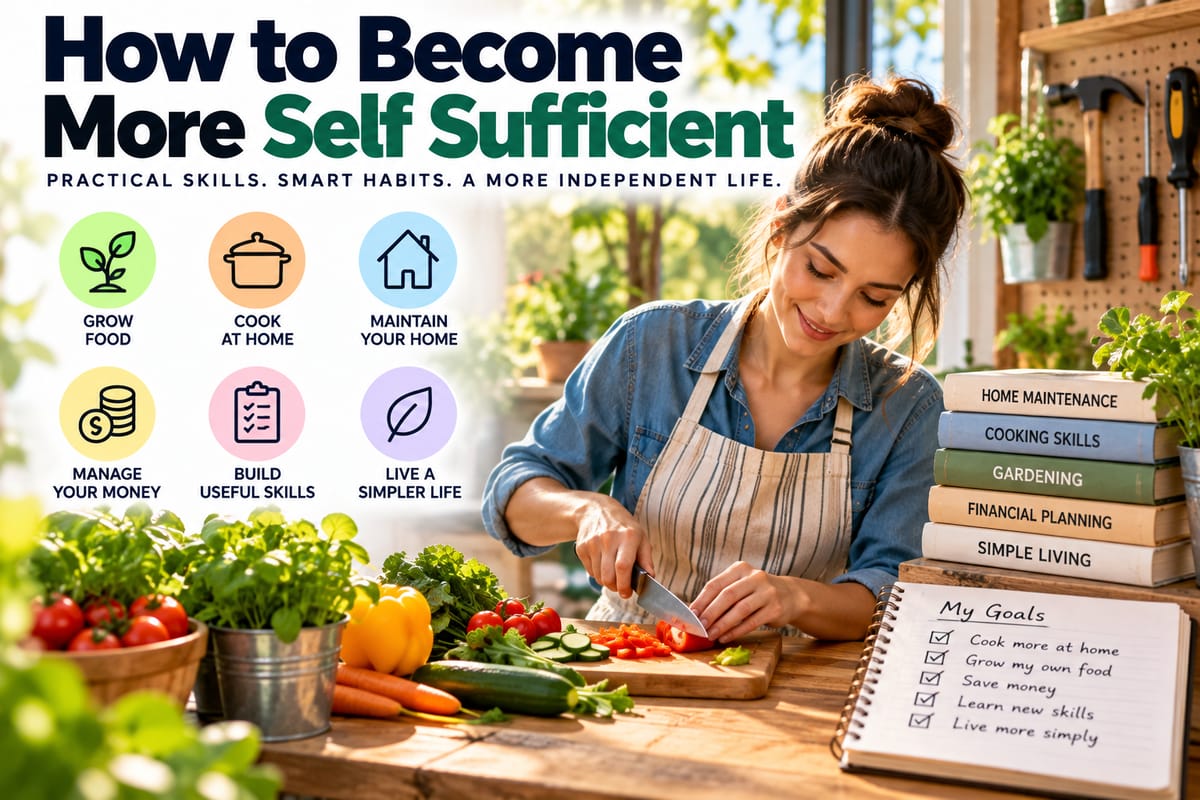
How to Become More Self Sufficient
Self-sufficiency is often associated with growing your own food, fixing things yourself, or living far away from modern conveniences. While those can be part of it, becoming more self-sufficient does not require abandoning modern life or doing everything alone.
At its core, self-sufficiency means developing the knowledge, practical skills, habits, and resources needed to handle more aspects of everyday life independently. It can involve managing money responsibly, preparing meals, maintaining a home, solving common problems, growing some of your own food, and making thoughtful decisions about what you actually need.
The goal is not complete independence from everyone else. Instead, it is about becoming more capable and resilient while reducing unnecessary dependence on systems, services, or habits that do not serve you well.
What Does It Mean to Be Self-Sufficient?
Self-sufficiency means having enough practical capability and preparation to meet many of your everyday needs without constantly relying on outside assistance.
That can look different for every person.
For one household, self-sufficiency might mean cooking most meals at home and maintaining a well-organized budget. For another, it might involve growing vegetables, repairing household items, or learning basic home maintenance.
Common areas of self-sufficiency include:
- Food preparation and storage
- Household maintenance
- Financial management
- Personal organization
- Basic repairs
- Health and wellness habits
- Emergency preparedness
- Gardening
- Time management
- Practical decision-making
A self-sufficient lifestyle is therefore less about achieving a particular living arrangement and more about building useful capabilities.
Start With Everyday Skills
The easiest way to become more self-sufficient is to begin with skills you can use regularly.
Cooking is a good example. Someone who can prepare several inexpensive meals from basic ingredients has more flexibility than someone who depends entirely on restaurants, takeout, or prepared foods.
Other useful skills include:
- Doing basic laundry and clothing care
- Cleaning and organizing a home
- Managing household supplies
- Reading product instructions
- Performing basic maintenance
- Planning meals
- Managing appointments
- Keeping important documents organized
These skills may appear simple, but collectively they make everyday life easier to manage.
A broader overview of practical capabilities can be found in Essential Life Skills Every Adult Should Know.
Learn to Cook From Basic Ingredients
Cooking is one of the most practical forms of self-sufficiency.
You do not need to become a professional chef. Learning a small collection of reliable meals can provide a strong foundation.
Start by learning techniques rather than memorizing dozens of recipes.
Useful techniques include:
- Roasting vegetables
- Cooking grains
- Preparing eggs
- Making soups and stews
- Cooking beans and legumes
- Preparing simple sauces
- Baking basic foods
- Properly storing leftovers
Once you understand how ingredients behave, it becomes easier to improvise meals based on what you already have.
This can also reduce food waste because ingredients are more likely to be used before they spoil.
Grow Some of Your Own Food
Gardening can increase self-sufficiency even if you live in an apartment or have limited outdoor space.
You do not need a large farm to start.
Small containers can be used to grow herbs, leafy greens, tomatoes, peppers, or other suitable plants depending on the local climate.
A productive garden requires more than planting seeds. You also need to learn about:
- Soil
- Watering
- Sunlight
- Plant spacing
- Pests
- Seasonal growing conditions
- Harvesting
- Seed storage
Growing even a small amount of food can teach valuable lessons about resource management and give you greater appreciation for the effort involved in producing what you eat.
Learn Basic Home Maintenance
You do not need to become a professional tradesperson to become more capable around your home.
Learning basic maintenance can help you identify problems early and handle simple jobs yourself.
Useful skills include:
- Replacing basic hardware
- Unclogging drains
- Changing air filters
- Patching small holes
- Tightening loose fixtures
- Maintaining appliances according to their instructions
- Using common hand tools
- Identifying when professional help is necessary
Knowing your limits is just as important as knowing how to perform a repair.
Self-sufficiency does not mean attempting dangerous electrical, structural, plumbing, or gas-related work without appropriate knowledge or professional assistance.
Build Financial Self-Sufficiency
Financial independence is another major part of becoming more self-sufficient.
A person who understands where their money goes has greater control over everyday decisions.
Start by tracking:
- Income
- Fixed expenses
- Variable expenses
- Debt payments
- Savings
- Subscriptions
- Irregular expenses
Creating an emergency fund can also provide a buffer when unexpected costs arise.
Financial self-sufficiency does not mean having unlimited money. It means developing the ability to make informed choices with the resources available to you.
Become Better at Managing Responsibilities
Self-sufficiency requires more than individual skills. It also requires the ability to keep track of responsibilities consistently.
Bills, appointments, household maintenance, shopping, work commitments, personal goals, and family obligations can quickly become overwhelming when they are not organized.
Learning how to prioritize and manage these responsibilities is an important part of becoming more capable.
The practical side of this process is explored in How to Manage Everyday Responsibilities as an Adult.
Simple tools such as calendars, reminders, checklists, and weekly planning sessions can make a significant difference.
Reduce Dependence on Convenience
Modern life provides countless conveniences, and there is nothing inherently wrong with using them.
The problem can arise when convenience becomes the only way you know how to accomplish something.
For example, someone who always orders prepared food may eventually lose confidence in cooking. Someone who always hires someone for basic household tasks may never develop basic maintenance skills.
The goal is not to eliminate convenience but to maintain alternatives.
If you know how to cook, you can still order takeout. If you understand basic home maintenance, you can still hire a professional when appropriate.
Having options is a major part of self-sufficiency.
Learn to Repair Before Replacing
A disposable approach to everyday possessions can make households more dependent on constant purchasing.
Learning basic repair skills can extend the useful life of many items.
Depending on the object, repairs might involve:
- Sewing a button
- Patching clothing
- Tightening furniture
- Replacing simple hardware
- Repairing small household items
- Cleaning appliances properly
- Replacing worn components
Before throwing something away, consider whether it can be cleaned, repaired, repurposed, or professionally serviced.
Repairing everything is not always practical or economical, but developing the habit of evaluating an item before replacing it can reduce unnecessary consumption.
Simplify Your Lifestyle
Self-sufficiency becomes easier when life itself is less complicated.
A household with excessive possessions, complicated routines, unnecessary subscriptions, and too many competing commitments can require significant effort just to maintain.
Simplifying does not mean giving up everything you enjoy.
It can mean removing things that create work without providing enough value.
This principle is explored further in How Simple Living Can Reduce Lifestyle Complexity.
Simplification might involve:
- Reducing unused subscriptions
- Decluttering possessions
- Creating simpler meal routines
- Limiting unnecessary commitments
- Organizing frequently used items
- Establishing predictable household routines
A simpler system is often easier to maintain independently.
Create a Practical Emergency Supply
Self-sufficiency also involves preparing for temporary disruptions.
An emergency supply does not have to resemble an extreme survival kit. A basic household supply can simply provide additional flexibility when something unexpected happens.
Depending on your circumstances, useful items may include:
- Drinking water
- Shelf-stable food
- Flashlights
- Batteries
- Basic first-aid supplies
- Essential medications
- Hygiene products
- Important documents
- Phone charging equipment
The appropriate supplies depend on your household, location, climate, health needs, and potential risks.
The purpose is not to prepare for every imaginable disaster. It is to avoid being completely unprepared when ordinary disruptions occur.
Learn How to Make Things From Scratch
Making something yourself can be another useful form of self-sufficiency.
This does not mean every household item needs to be homemade. Instead, choose areas where learning a basic process is useful or enjoyable.
Examples include:
- Cooking basic foods
- Making simple household cleaners where appropriate
- Sewing
- Gardening
- Preserving food safely
- Building simple storage solutions
- Creating basic crafts
- Performing routine maintenance
Making things yourself can also help you understand how products work, which can make you a more informed consumer.
Improve Your Problem-Solving Skills
Self-sufficiency depends heavily on problem-solving.
When something goes wrong, the first response does not always need to be immediately asking someone else to fix it.
Instead, develop the habit of asking:
- What exactly is happening?
- What changed before the problem appeared?
- Is there an obvious explanation?
- Can I safely inspect the problem?
- Do I have the tools or knowledge to address it?
- When should I stop and seek professional help?
This approach applies to household problems, budgeting challenges, technology issues, organization, and many other parts of life.
Being self-sufficient does not mean knowing every answer. It means becoming comfortable figuring out what you do not know.
Develop a Personal Knowledge System
As you learn new skills, keep useful information somewhere accessible.
You might maintain digital notes or a household reference document containing:
- Appliance manuals
- Maintenance schedules
- Important contact information
- Household inventories
- Budget information
- Emergency procedures
- Gardening notes
- Recipes
- Repair instructions
- Important renewal dates
This turns individual experiences into a reusable knowledge base.
Over time, your accumulated knowledge can make everyday decisions faster and easier.
Use Technology Without Becoming Dependent on It
Technology can support self-sufficiency when used intentionally.
Calendar applications can organize responsibilities. Budgeting tools can help track spending. Digital manuals can provide instructions. Educational platforms can help you learn practical skills.
At the same time, it is useful to maintain basic offline knowledge and alternatives when possible.
For example, knowing how to locate important information without relying on a single application can provide additional resilience if a device, account, or internet connection becomes unavailable.
The goal is to use technology as a tool rather than allowing it to become the only way you can accomplish something.
Build Skills Gradually
Trying to become completely self-sufficient overnight can quickly become overwhelming.
A better approach is to build one capability at a time.
You might start with cooking five reliable meals. Then learn basic home repairs. Next, improve your budgeting system. Later, try growing a few vegetables or learning basic sewing.
A simple progression might look like this:
Month 1: Food
Learn basic cooking, meal planning, and food storage.
Month 2: Home
Learn basic cleaning, maintenance, and simple repairs.
Month 3: Money
Create a realistic budget and review recurring expenses.
Month 4: Organization
Develop systems for appointments, documents, shopping, and household tasks.
Month 5: Practical Skills
Choose one new skill such as gardening, sewing, woodworking, or basic vehicle maintenance.
Month 6: Resilience
Review emergency supplies and identify areas where you remain unnecessarily dependent on a single solution.
The specific timeline does not matter as much as consistent progress.
Know When to Ask for Help
One of the most important parts of genuine self-sufficiency is understanding that independence does not mean isolation.
Doctors, electricians, plumbers, mechanics, accountants, lawyers, teachers, and other professionals possess specialized knowledge that can be extremely valuable.
Attempting a complex or dangerous task simply to avoid asking for help is not necessarily self-sufficient.
A capable person knows when to handle something personally and when to bring in someone with the right expertise.
The goal is informed independence, not refusing assistance.
Make Self-Sufficiency Fit Your Lifestyle
There is no universal definition of self-sufficient living.
A person living in an apartment will have different opportunities from someone with a large property. Someone with a demanding career may prioritize different skills from someone with more available time.
The most useful approach is to identify areas where greater capability would make your own life easier.
The broader concept of designing a lifestyle around personal needs, priorities, resources, and routines is explored in the Complete Guide to Lifestyle Design and Personal Living.
Self-sufficiency should support your life rather than become another source of pressure.
Small Capabilities Create Greater Independence
Becoming more self-sufficient is ultimately about accumulating practical capabilities.
Knowing how to prepare a meal, repair a minor problem, manage your finances, grow a few vegetables, organize responsibilities, maintain your possessions, and solve everyday problems can make a meaningful difference.
You do not need to produce everything you consume or handle every challenge without assistance. Instead, focus on creating more choices and reducing unnecessary dependence.
Every useful skill adds another layer of independence. Over time, those small capabilities can create a lifestyle that is more flexible, resilient, organized, and confidently managed.