How to Choose Cleaning Cloths and Sponges
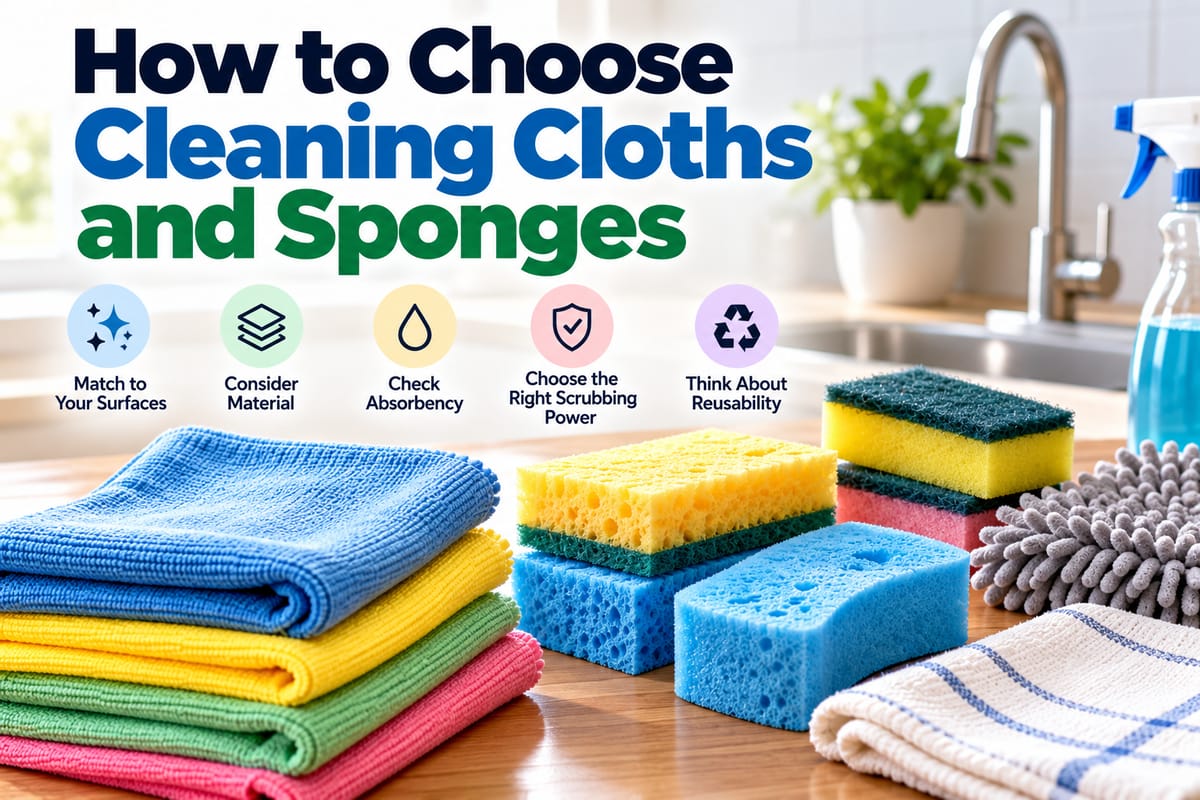
How to Choose Cleaning Cloths and Sponges
Cleaning cloths and sponges may seem like simple household items, but choosing the right one can make everyday cleaning easier, more efficient and more hygienic.
Different surfaces require different levels of softness, absorbency and scrubbing power. A cloth that works well on a kitchen countertop may not be appropriate for delicate glass, while a rough sponge that removes stubborn residue from a pan could damage a sensitive surface.
The best cleaning tools depend on what needs to be cleaned, how much moisture is involved, whether scrubbing is required and how easily the item can be washed or replaced.
Understanding the differences between common cleaning cloths and sponges can help households build a practical collection without buying more products than necessary.
Why the Right Cleaning Cloth or Sponge Matters
Cleaning involves more than removing visible dirt.
The tool used during cleaning can affect:
- How quickly a surface can be cleaned
- How much water is needed
- How effectively dirt is removed
- Whether a surface becomes scratched
- How much cleaning product is required
- How easily the tool can be rinsed
- How hygienic the cleaning process remains
Using the wrong material can create unnecessary problems.
For example, an abrasive sponge may remove a stubborn mark from one surface but leave scratches on another. A highly absorbent cloth may be excellent for spills but less convenient when applying a small amount of cleaning solution.
Choosing tools according to the task is therefore an important part of an effective cleaning routine.
Common Types of Cleaning Cloths
Cleaning cloths come in many materials and sizes.
Some of the most common options include:
- Microfiber cloths
- Cotton cloths
- Terry cloths
- Cellulose cloths
- Polishing cloths
- Glass-cleaning cloths
- Disposable cleaning wipes
- Reusable specialty cloths
Each type has different characteristics.
Microfiber Cloths
Microfiber cloths are widely used for household cleaning because their fine synthetic fibers can pick up dust, dirt and moisture effectively.
They can be useful for:
- Glass
- Mirrors
- Countertops
- Appliances
- Furniture
- Electronics, when appropriate
- General dusting
Microfiber cloths are available in different textures and thicknesses, so not every microfiber cloth is designed for exactly the same purpose.
Soft microfiber is generally useful for surfaces where scratching is a concern, while more textured varieties can provide additional cleaning power.
Cotton Cloths
Cotton cloths are absorbent and can be useful for general household tasks.
They can work well for:
- Wiping spills
- Drying surfaces
- Cleaning larger areas
- General household cleaning
Cotton may not always be the best option for streak-free glass because it can leave lint depending on the fabric.
Terry Cloth
Terry cloth has a looped texture that provides good absorbency.
It can be useful for:
- Drying
- Absorbing spills
- Bathroom cleaning
- General household tasks
Its thicker texture can make it less convenient than thin microfiber cloths for certain detailed cleaning jobs.
Glass and Polishing Cloths
Some cloths are specifically designed for smooth surfaces where streaks and lint are concerns.
These can be useful for:
- Mirrors
- Windows
- Glass tables
- Stainless-steel surfaces
- Other polished materials
The exact material and recommended use should be checked because different manufacturers design polishing cloths differently.
Common Types of Sponges
Sponges are particularly useful when cleaning requires moisture, wiping and sometimes light scrubbing.
Common varieties include:
- Cellulose sponges
- Synthetic sponges
- Non-scratch sponges
- Scrubbing sponges
- Heavy-duty abrasive sponges
- Natural sponges
- Melamine foam sponges
The key differences are absorbency, softness and abrasiveness.
Cellulose Sponges
Cellulose sponges are made from plant-based cellulose and are known for their ability to absorb water.
They can be useful for:
- Wiping countertops
- Cleaning sinks
- Absorbing spills
- General kitchen cleaning
They are generally softer than abrasive scrubbers, making them suitable for many everyday tasks.
Non-Scratch Sponges
Non-scratch sponges are designed to provide some cleaning friction while being gentler than more abrasive scrubbers.
They can be useful for surfaces where a stronger scrubber might cause damage.
However, “non-scratch” does not necessarily mean that the sponge is appropriate for every surface. Manufacturers’ instructions should still be followed.
Abrasive Sponges
Abrasive sponges contain a rougher surface designed to loosen stubborn residue.
They can be useful for difficult cleaning jobs involving:
- Cookware
- Hardened food residue
- Grime
- Some durable surfaces
They should be used carefully.
Abrasive materials can scratch surfaces such as certain plastics, coatings, polished finishes and delicate appliances.
Melamine Foam Sponges
Melamine foam is a specialized cleaning material that can remove certain marks through its fine abrasive structure.
It can be effective on some scuff marks and stains, but it should not automatically be treated as a universal cleaning sponge.
Because its cleaning action is abrasive, it can alter or dull some finishes.
Always test an inconspicuous area when there is uncertainty about a surface.
Match the Tool to the Surface
One of the most important rules when choosing cleaning cloths and sponges is to consider the surface first.
Glass
Glass often benefits from a soft, low-lint cloth that can remove moisture without leaving excessive streaks.
Stainless Steel
A soft microfiber cloth can be useful for many stainless-steel surfaces.
Following the direction of the surface’s grain where applicable can also help produce a more consistent appearance.
Wood
Wood surfaces require attention to their finish and moisture sensitivity.
A soft, lightly damp cloth may be more appropriate than a soaking wet sponge.
Ceramic and Porcelain
Many ceramic and porcelain surfaces can tolerate ordinary cloths and non-abrasive sponges, although delicate finishes should still be treated carefully.
Nonstick Cookware
Nonstick coatings can be damaged by aggressive scrubbing.
A soft sponge or manufacturer-approved cleaning tool is generally preferable to a harsh abrasive pad.
Painted Surfaces
Painted walls, cabinets and furniture can vary considerably in durability.
Start with the gentlest appropriate cloth and avoid aggressive scrubbing unless the finish is known to tolerate it.
Consider How Much Scrubbing Is Needed
The amount of friction required is another important consideration.
For dust and light dirt, a soft microfiber cloth may be enough.
For spills and everyday grime, a damp cloth or soft sponge may work better.
For hardened residue, a more textured sponge may be necessary.
The goal should be to use the least abrasive tool that can effectively complete the task.
This reduces the risk of damaging surfaces unnecessarily.
Think About Absorbency
Absorbency matters when dealing with water, spills and liquid cleaning solutions.
Highly absorbent materials can be useful for:
- Kitchen spills
- Bathroom surfaces
- Drying countertops
- Wiping up water
- Cleaning wet areas
However, very absorbent materials can sometimes hold onto dirt and moisture, which makes proper rinsing and drying especially important.
Consider Lint and Streaking
Some cleaning tasks require a cloth that leaves very little lint.
Glass and mirrors are common examples.
A cloth that works well for absorbing a spill may leave fibers behind when used on a mirror.
If streak-free results matter, choose a cloth specifically intended for glass or polishing rather than assuming every household cloth will perform equally well.
Reusable Versus Disposable Cleaning Materials
Reusable cloths and sponges can reduce the number of disposable cleaning materials used in a household.
Reusable cloths can often be washed and used repeatedly, making them practical for routine cleaning.
Disposable wipes can be convenient for specific situations, but they create waste after a single use.
Neither option is automatically appropriate for every task.
Consider:
- Frequency of cleaning
- Hygiene requirements
- Laundry capacity
- Cost
- Waste generation
- The type of surface
- The cleaning product being used
A household may reasonably use a combination of reusable and disposable materials depending on the situation.
How Many Cleaning Cloths Does a Home Need?
There is no universal number.
The appropriate quantity depends on the size of the household, number of rooms, cleaning frequency and whether cloths are washed frequently.
A useful system might include separate cloths for:
- Kitchen surfaces
- Bathrooms
- General dusting
- Glass
- Polishing
- Spills
- Floors or other specialized tasks
Having several cloths available can prevent people from continuing to use a dirty cloth simply because a clean one is unavailable.
Color-Coding Cleaning Cloths
Color-coding can make it easier to prevent cross-use between different areas.
For example, a household might assign:
- One color to bathrooms
- Another to the kitchen
- Another to general household surfaces
- Another to glass
The exact colors do not matter.
What matters is having a simple system that everyone understands.
Color coding can be particularly useful in larger households where several people participate in cleaning.
Avoid Using the Same Cloth Everywhere
A cloth used to clean a toilet or bathroom floor should not automatically be moved to a kitchen countertop.
Cross-use can transfer dirt and microorganisms between areas.
Separate cleaning materials by room or task where practical.
This does not mean every surface requires a completely unique product. It means tools used for particularly dirty or contamination-prone tasks should not casually be reused for food-preparation areas or other sensitive surfaces.
Choosing Kitchen Cleaning Cloths
Kitchen cloths often need to handle grease, food residue, spills and frequent washing.
Useful options can include:
- Microfiber cloths
- Cotton cloths
- Cellulose sponges
- Non-scratch sponges
- Specialized dish sponges
Keep separate materials for wiping food-preparation surfaces and cleaning areas such as floors or heavily soiled equipment.
A kitchen cloth should also be allowed to dry properly between uses.
Choosing Bathroom Cleaning Cloths
Bathrooms can involve soap residue, water deposits, dust and other types of grime.
Microfiber cloths and suitable non-abrasive sponges can be useful for many bathroom surfaces.
Separate cloths can be designated for:
- Mirrors
- Sinks
- Counters
- Tubs
- Toilets
The exact arrangement depends on the household’s cleaning routine and the materials being cleaned.
Choosing Cloths for Dusting
Dusting generally does not require heavy scrubbing.
A soft microfiber cloth can often collect dust without requiring large amounts of cleaning solution.
For delicate objects, choose a particularly soft cloth and avoid excessive pressure.
A slightly damp cloth may be useful when dry dusting simply moves particles from one location to another.
Choosing Cloths for Electronics
Electronics require additional care because moisture and abrasive materials can damage surfaces.
For many screens and delicate devices, a clean, soft, lint-free cloth is preferable.
Avoid applying liquids directly to electronic equipment unless the manufacturer’s instructions specifically permit it.
Instead, follow the device manufacturer’s cleaning guidance.
Cleaning Stainless Steel Without Scratching It
Stainless steel appliances can show fingerprints, smudges and streaks easily.
A soft microfiber cloth can often handle routine cleaning.
Avoid aggressive abrasive materials unless the manufacturer specifically recommends them.
When cleaning products are involved, verify that the product is appropriate for the particular stainless-steel finish.
A gentle approach can help preserve the appearance of the surface.
How Cleaning Products Affect Tool Choice
The cleaning solution being used can influence which cloth or sponge is appropriate.
Some chemicals can damage particular materials.
Others may require protective gloves or ventilation.
This is why the cleaning tool should not be selected independently of the cleaning product.
For a broader explanation of household cleaning solutions and their purposes, see Cleaning Products Explained.
Always follow product-label instructions and avoid mixing cleaning chemicals unless the manufacturer specifically states that doing so is safe.
Cleaning Tools Work as a System
Cloths and sponges are only part of a household’s cleaning equipment.
A practical cleaning system can include:
- Brushes
- Mops
- Vacuum cleaners
- Squeegees
- Scrubbers
- Buckets
- Dusters
- Gloves
- Cloths
- Sponges
Different tools solve different cleaning problems.
The Cleaning Tools: Complete Guide to Household Tools and Uses provides a broader overview of how these tools fit into household cleaning.
How to Choose a Cloth for General Cleaning
For a general-purpose household cloth, look for one that is:
- Soft enough for common surfaces
- Absorbent
- Durable
- Easy to wash
- Low-lint
- Comfortable to handle
Microfiber is a popular option because it can perform several of these functions.
However, there is no requirement to use microfiber for everything. Cotton and other materials can be useful depending on the task.
How to Choose a Sponge for Dishes
Dishwashing sponges need to balance cleaning power with surface safety.
For everyday dishes, a soft or non-scratch sponge is often sufficient.
For stubborn food residue, a stronger scrubbing surface may be useful on cookware that can tolerate it.
Avoid using abrasive sponges on delicate coatings or surfaces unless they are specifically approved for that purpose.
How to Choose a Sponge for Bathroom Cleaning
Bathroom sponges should generally be selected according to the surface.
A soft sponge can handle ordinary wiping and soap residue, while a more textured sponge may help with stubborn grime on durable surfaces.
Avoid assuming that a sponge labeled “heavy duty” is suitable for every bathroom surface.
How to Keep Cleaning Cloths Clean
A dirty cleaning cloth cannot perform effectively.
After use:
- Rinse the cloth thoroughly when appropriate.
- Remove visible dirt and cleaning residue.
- Wash reusable cloths according to their care instructions.
- Allow them to dry completely.
- Store clean cloths separately from dirty ones.
Do not leave damp cloths crumpled in a pile for extended periods.
Moisture can create an environment where unpleasant odors and microbial growth become problems.
How to Care for Microfiber Cloths
Microfiber cloths require appropriate care to maintain their performance.
Follow the manufacturer’s washing instructions.
Avoid products or washing practices that can interfere with the fibers’ ability to absorb and collect debris.
Most importantly, make sure clean cloths are fully dry before storing them.
How to Care for Sponges
Sponges should also be rinsed thoroughly after use.
Remove trapped food particles, soap residue and other debris where possible.
Allow the sponge to dry between uses rather than leaving it submerged in water.
Replace sponges when they become:
- Damaged
- Permanently dirty
- Smelly
- Difficult to rinse clean
- Worn out
There is no need to keep a sponge indefinitely simply because it still looks usable.
When to Replace Cleaning Cloths
Reusable cloths eventually wear out.
Signs that a cloth may need replacement include:
- Fraying
- Persistent odors
- Significant staining
- Reduced absorbency
- Damaged fibers
- Difficulty washing it clean
A heavily worn cloth may still be useful for rough household tasks before being discarded, provided that doing so is appropriate for the material and task.
When to Replace Sponges
Sponges should be replaced when they can no longer be cleaned effectively or have deteriorated.
A sponge that smells unpleasant even after thorough rinsing and drying may be ready for replacement.
Likewise, a sponge with significant tears or a deteriorated abrasive surface may no longer perform as intended.
Organize Cleaning Cloths and Sponges Properly
A good storage system makes it easier to keep cleaning tools separated and accessible.
Keep clean cloths in a dry, designated area.
Sponges should have an opportunity to drain and dry rather than sitting in stagnant water.
Separate unused and clean supplies from tools that have already been used.
For a more comprehensive approach, see How to Organize and Store Household Cleaning Supplies Efficiently.
Avoid Storing Everything Under the Sink
The area beneath a kitchen or bathroom sink is a convenient storage location, but it is not automatically the best place for every cleaning item.
Under-sink spaces can become crowded and may be vulnerable to leaks.
If cleaning supplies are stored there, organize them so that:
- Containers remain upright
- Products are easy to identify
- Leaks can be detected
- Children cannot access hazardous products
- Clean cloths are kept away from chemical products
Some items may be better stored in a dedicated cabinet or storage container elsewhere.
Consider the Size of the Cloth
Large cloths can cover a large surface quickly, while smaller cloths can be easier to control for detailed cleaning.
Consider the task.
Large surfaces such as tables and countertops may benefit from a larger cloth.
Small cloths can be convenient for:
- Mirrors
- Fixtures
- Handles
- Small appliances
- Detailed areas
There is no need for every cleaning cloth in the home to be the same size.
Consider the Texture
Texture affects cleaning performance.
A smooth cloth may be ideal for polishing or glass.
A textured cloth may provide more friction for general cleaning.
A rough sponge can loosen stubborn residue but may also increase the risk of scratching.
Choosing texture according to the task is therefore more useful than assuming a rougher material is always better.
Think About Durability
A cleaning tool is used repeatedly, so durability matters.
A low-cost cloth that quickly falls apart may not be more economical than a durable reusable cloth that survives many washes.
Consider:
- Material quality
- Stitching
- Washing requirements
- Frequency of use
- Expected lifespan
- Replacement cost
For everyday household cleaning, durable tools can reduce the frequency of replacement.
Consider Environmental Impact
Reusable cloths can reduce reliance on disposable cleaning materials, particularly when they are washed and reused many times.
However, environmental impact is not determined by one characteristic alone.
Manufacturing, washing, drying, transportation and eventual disposal all contribute to a product’s overall footprint.
The most practical approach is often to choose durable products, use them efficiently and avoid unnecessary disposal.
Avoid Buying More Than You Need
Cleaning aisles contain a huge variety of cloths, sponges and specialty products.
It can be tempting to purchase a different tool for every possible cleaning situation.
A simpler collection can often handle most household tasks.
For example, a household may need only:
- Several general-purpose microfiber cloths
- A few specialized glass or polishing cloths
- Soft sponges
- A small number of appropriate scrubbers
- Separate materials for particularly dirty areas
The ideal collection depends on the home and its surfaces.
Build a Simple Cleaning Tool Collection
A practical household collection might look like this:
| Cleaning Task | Possible Tool |
|---|---|
| General dusting | Soft microfiber cloth |
| Countertops | Microfiber or suitable cotton cloth |
| Glass | Low-lint glass cloth |
| Spills | Absorbent cloth |
| Dishes | Soft dish sponge |
| Stubborn residue | Appropriate scrub sponge |
| Delicate surfaces | Soft, non-abrasive cloth |
| Bathroom cleaning | Dedicated cloth or suitable sponge |
| Polishing | Specialized microfiber cloth |
This is only a starting point. Surface materials and manufacturer recommendations should always take priority.
Common Mistakes When Choosing Cleaning Cloths and Sponges
Several mistakes can make cleaning less effective or increase the risk of surface damage.
Using One Cloth for Everything
Different areas have different hygiene requirements.
Choosing the Most Abrasive Tool
More scrubbing power is not always better.
Ignoring Manufacturer Instructions
Surface and appliance manufacturers may specify particular cleaning materials.
Leaving Sponges Wet
Persistent moisture can contribute to odors and microbial growth.
Using Dirty Cloths
A heavily soiled cloth can spread dirt rather than remove it.
Applying Too Much Cleaning Product
More product does not necessarily mean better cleaning and may leave residue.
Storing Clean and Dirty Tools Together
This makes it difficult to maintain a hygienic cleaning system.
A Simple Decision Process
When deciding which cloth or sponge to use, ask five questions:
1. What Am I Cleaning?
Identify the surface and material.
2. How Dirty Is It?
Light dust requires a different tool from hardened residue.
3. Does the Surface Scratch Easily?
If yes, choose a softer, non-abrasive option.
4. Do I Need Absorbency or Scrubbing?
Choose a cloth for wiping and drying or a sponge when additional friction is needed.
5. Can the Tool Be Cleaned Easily?
A reusable tool should be practical to wash, rinse and dry.
This simple process can prevent many common mistakes.
Choosing Quality Over Complexity
The best cleaning setup does not have to contain dozens of specialized products.
A small collection of well-chosen cloths and sponges can handle a large proportion of everyday household cleaning.
The most important factors are compatibility with the surface, appropriate cleaning power, absorbency, durability and ease of maintenance.
When combined with suitable cleaning products and other household tools, the right cloths and sponges can make routine cleaning faster and more manageable.
Building a Cleaning Routine Around the Right Tools
Cleaning becomes easier when tools are chosen according to the job rather than randomly.
Use soft materials for delicate surfaces, absorbent cloths for spills, low-lint materials for glass and appropriate sponges when additional scrubbing is necessary.
Keep cleaning tools separated by task where practical, wash reusable materials properly and replace worn-out sponges and cloths when they can no longer be cleaned effectively.
For a broader approach to keeping a household clean and organized, The Ultimate Guide to Cleaning Your Home can help put these individual tools into a complete cleaning routine.
The goal is not to find one perfect cloth or sponge for every situation. It is to build a small, practical collection that matches the surfaces in the home and makes everyday cleaning easier, safer and more efficient.