How To Improve Poor Garden Soil
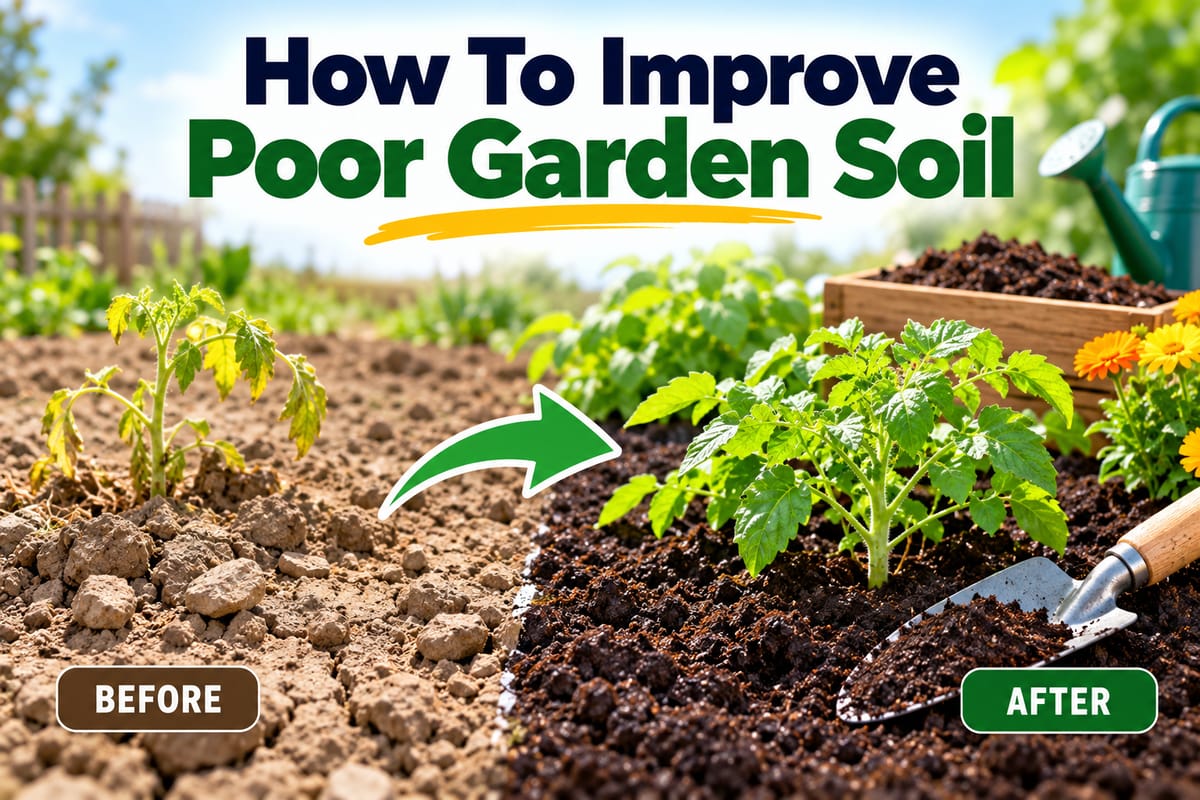
How To Improve Poor Garden Soil
Healthy soil is one of the foundations of a productive garden. It supports plant roots, stores water and nutrients, provides physical stability, and contains a complex community of microorganisms that contribute to nutrient cycling and organic matter decomposition.
When garden soil is compacted, poorly drained, extremely sandy, low in organic matter, or otherwise unsuitable for the plants being grown, even healthy plants can struggle.
The good news is that poor soil can often be improved gradually. The most effective approach is usually not to add one product and expect an immediate transformation. Instead, gardeners can identify the underlying problem, improve soil structure, increase organic matter, manage water appropriately, and choose plants that are suited to the conditions.
For a broader look at what makes soil productive, The Ultimate Guide to Soil Health explains the major factors that influence garden soil.
What Makes Garden Soil Poor?
There is no single definition of poor soil.
Different plants prefer different soil conditions, and soil that works well for one plant may be unsuitable for another. However, several characteristics commonly make gardening more difficult.
Poor garden soil may be:
- Very compacted
- Low in organic matter
- Extremely sandy
- Heavy in clay
- Poorly drained
- Too dry
- Too wet
- Nutrient deficient
- Too acidic or alkaline
- Low in biological activity
The first step is therefore to determine what is actually wrong with the soil rather than adding amendments without a clear purpose.
Start by Observing the Soil
Before making major changes, examine the garden carefully.
Look at how water behaves after rainfall or irrigation. Does it disappear quickly, or does it remain on the surface for hours?
Examine the soil when it is moderately moist. Does it crumble easily, or does it form hard clumps?
Look at the plants growing in the area. Are they struggling uniformly, or are problems concentrated in particular sections?
These observations can reveal important clues about the soil’s physical condition.
Test the Soil
A soil test can provide information that cannot be determined reliably just by looking at the ground.
Depending on the test, results may include soil pH, nutrient levels, organic matter, and other characteristics.
Testing is particularly useful before applying large quantities of fertilizer or lime because excessive amendments can create new problems.
A basic soil test can help answer questions such as:
- Is the soil too acidic?
- Is it too alkaline?
- Is a particular nutrient deficient?
- Is the soil suitable for the intended plants?
- Are fertilizer applications actually necessary?
Improve Soil With Organic Matter
Adding organic matter is one of the most widely useful approaches to improving many types of garden soil.
Organic matter can help improve soil structure, support microorganisms, increase water-holding capacity in some soils, and improve nutrient availability over time.
Sources can include:
- Finished compost
- Well-aged organic materials
- Leaf mold
- Certain well-aged manures
- Plant residues
- Other appropriate organic amendments
The appropriate material depends on the garden and the existing soil.
Organic matter is not a one-time fix. It gradually decomposes, so maintaining soil organic matter requires continued attention.
Use Compost to Improve Soil
Compost is a useful soil amendment because it adds decomposed organic material and can improve the physical and biological characteristics of many garden soils.
Well-finished compost can be incorporated into planting areas or used as a surface amendment depending on the garden’s needs.
It can also be added periodically to help maintain organic matter as existing material decomposes.
The process of producing and applying compost is covered in How to Make Compost and Use It Effectively in a Garden.
Improving Heavy Clay Soil
Clay soils contain very small mineral particles that can pack tightly together.
When wet, clay can become sticky and difficult to work. When dry, it can become hard and compacted.
However, clay soil is not necessarily bad soil. Clay can hold water and nutrients effectively. The problem often comes from poor structure, compaction, and inadequate drainage.
Adding organic matter over time can help improve aggregation and create more favorable conditions for roots and soil organisms.
Avoid repeatedly working clay soil when it is extremely wet because doing so can damage its structure and create further compaction.
Improving Sandy Soil
Sandy soils contain relatively large particles and generally drain quickly.
This can make them easy to work, but water and nutrients may move through the soil rapidly.
Adding organic matter can help increase the soil’s ability to retain moisture and nutrients.
Mulching the surface can also reduce evaporation and protect the soil from drying out quickly.
Plants suited to well-drained conditions may perform particularly well in sandy soils, so improvement does not necessarily mean trying to transform the soil completely.
Dealing With Compacted Soil
Compaction reduces the spaces between soil particles.
These spaces are important because they allow air and water to move through the soil while giving roots room to grow.
Compacted soil can occur because of:
- Heavy foot traffic
- Vehicles or machinery
- Construction activity
- Repeated cultivation
- Working wet soil
- Poor soil structure
Reducing unnecessary traffic is an important first step.
For smaller areas, carefully loosening the soil can help. In some situations, deep-rooted plants can also contribute to improved soil structure over time.
Avoid Working Wet Soil
One of the easiest ways to damage soil structure is to work it when it is excessively wet.
Wet soil can compress easily under pressure, particularly clay-heavy soil.
Instead of immediately digging after heavy rain, allow the soil to reach a workable moisture level.
A simple test is to take a handful of soil and gently squeeze it. If it remains extremely sticky and forms a dense, shiny mass, it may be too wet to work.
Improve Drainage Where Necessary
Poor drainage can create serious problems for plants that require well-drained conditions.
Standing water can reduce oxygen availability around roots and create conditions that encourage root problems.
Improving drainage may involve:
- Adding organic matter
- Redesigning planting beds
- Creating raised beds
- Redirecting excess water
- Installing appropriate drainage systems
- Selecting plants suited to wetter conditions
The best solution depends on why the water is accumulating.
Simply adding sand to heavy clay is generally not a universal solution and can sometimes make the soil structure worse if done incorrectly.
Use Raised Beds
Raised beds can provide greater control over growing conditions when existing soil is particularly difficult.
A raised bed allows gardeners to create a new growing medium with appropriate proportions of soil and organic matter.
This can be especially useful where the native soil is heavily compacted, contaminated, extremely rocky, or otherwise unsuitable for the desired plants.
Raised beds can also improve drainage and make certain gardening tasks easier.
However, the material used to fill them should still be of appropriate quality.
Improve Soil Structure Gradually
Soil improvement is usually a long-term process.
Adding a large quantity of one material all at once can create imbalances or change drainage characteristics too quickly.
A more sustainable approach is to add suitable organic matter periodically, protect the soil surface, reduce compaction, and allow natural biological processes to improve structure.
Over time, earthworms, microorganisms, plant roots, and decomposing organic matter can contribute to a more stable soil environment.
Protect Soil With Mulch
Mulch covers the soil surface and can provide several benefits.
Depending on the material used, mulch can:
- Reduce evaporation
- Moderate soil temperature
- Reduce erosion
- Suppress some weeds
- Protect soil structure
- Add organic matter as it decomposes
Organic mulches can include shredded leaves, straw, wood-based materials, and other suitable plant material.
Mulch should generally be kept away from direct contact with plant stems and tree trunks to reduce the risk of moisture-related problems.
Avoid Bare Soil When Possible
Exposed soil can be vulnerable to erosion, drying, crusting, and temperature fluctuations.
Plants, mulch, and other forms of ground cover can protect the surface.
Cover crops, living ground covers, and seasonal vegetation can also contribute organic material when managed appropriately.
Keeping soil covered is particularly useful in areas exposed to heavy rainfall or strong sunlight.
Feed the Soil, Not Just the Plant
Fertilizer can provide specific nutrients, but healthy soil involves more than nutrient levels.
Soil contains microorganisms, organic matter, air spaces, water, minerals, and living roots.
A soil-focused approach therefore considers structure and biological activity alongside fertility.
Adding organic matter, maintaining plant diversity, reducing unnecessary disturbance, and protecting the surface can help create conditions where plants and soil organisms can function effectively.
Use Fertilizer Based on Need
Fertilizer can be valuable when plants genuinely need additional nutrients.
However, applying fertilizer without understanding existing soil conditions can result in excessive nutrients.
Too much fertilizer can contribute to nutrient imbalances and may cause environmental problems if nutrients move into waterways.
The Complete Guide to Garden Fertilizers and Plant Nutrition provides additional information about plant nutrients and how fertilizers fit into garden management.
Understand Soil pH
Soil pH affects the availability of several plant nutrients.
Some plants prefer acidic conditions, while others grow better in neutral or moderately alkaline soils.
A nutrient can be present in the soil but still be difficult for plants to absorb if the pH is unsuitable.
This is why simply adding more fertilizer may not correct a nutrient deficiency if the underlying problem is soil chemistry.
What Garden Soil pH Means and How Acidity Affects Plant Nutrients provides a more detailed explanation of the relationship between pH and nutrient availability.
Do Not Automatically Add Lime
Lime is commonly used to raise soil pH, but it should not be applied simply because a plant appears unhealthy.
If soil is already sufficiently alkaline, adding lime can make nutrient availability problems worse.
A soil test can help determine whether lime is appropriate.
The same principle applies to other amendments: identify the problem before trying to correct it.
Consider Plant Selection
Improving soil does not necessarily mean making every part of the garden identical.
Some plants naturally tolerate sandy soils, while others prefer moisture-retentive conditions. Some tolerate acidic soil, while others perform better at a higher pH.
Selecting plants suited to existing conditions can reduce the amount of modification required.
A well-designed garden can contain different soil environments for different types of plants.
Add Organic Matter Regularly
Organic matter gradually breaks down.
This means that improving soil once does not permanently solve the problem.
Regular applications of compost, suitable mulch, plant residues, or other organic materials can help maintain soil quality.
The amount and frequency should depend on the garden, existing soil, climate, and material being used.
The goal is to maintain a healthy soil environment rather than continually adding large quantities of amendments.
Grow Cover Crops
Cover crops can be useful in vegetable gardens and other areas where soil would otherwise remain exposed.
Plants such as certain grasses, legumes, and other suitable cover crops can protect the soil surface and contribute organic material.
Some cover crops can also help capture nutrients and support soil structure.
The appropriate species depends on climate, growing season, garden goals, and whether the plants will be removed, incorporated, or left as surface residue.
Use Plants to Improve Soil Structure
Plant roots naturally create pathways through soil.
As roots grow, die, and decompose, they contribute organic material and create spaces that can influence water and air movement.
Deep-rooted plants can be particularly useful in some soil-improvement strategies.
However, roots alone cannot solve severe compaction or drainage problems. They work best as part of a broader soil-management approach.
Encourage Soil Organisms
Healthy soil contains an enormous community of organisms.
Bacteria, fungi, earthworms, insects, and other organisms contribute to decomposition and nutrient cycling.
Organic matter provides resources for many of these organisms.
Avoiding unnecessary disturbance and excessive use of broad-spectrum chemicals can also help protect soil biological activity.
A biologically active soil can support nutrient cycling and contribute to better soil structure over time.
Be Careful With Fresh Manure
Manure can contribute organic matter and nutrients, but fresh manure is not appropriate for every gardening situation.
Fresh manure can contain high levels of nutrients or salts and may contain pathogens or weed seeds depending on its source and handling.
Well-aged or properly composted manure is generally easier to manage.
Gardeners should also follow appropriate food-safety practices when using manure around edible crops.
Avoid Overwatering
Water management is an important part of soil improvement.
Overwatering can reduce oxygen availability around roots, contribute to nutrient loss, and create favorable conditions for some plant diseases.
Underwatering, on the other hand, can stress plants and reduce biological activity.
The appropriate watering schedule depends on soil type, weather, plant species, season, and local conditions.
Improving soil structure can make water management easier because well-structured soil can provide a better balance between drainage and water retention.
Use Mulch to Manage Water
Mulch can complement good irrigation practices.
A suitable layer of organic mulch can reduce evaporation and protect the surface from drying rapidly.
This can be particularly useful in sandy soils or during hot, dry weather.
However, mulch should not be used to compensate for fundamentally poor drainage. If water already accumulates around roots, adding a thick layer of moisture-retaining material may not solve the underlying problem.
Improve Soil Without Destroying Its Structure
Frequent deep digging and turning can disturb soil structure and living organisms.
While cultivation may be useful in certain situations, gardeners can often reduce unnecessary disturbance by using mulch, compost, targeted cultivation, and appropriate planting methods.
The best approach depends on the garden and its specific problems.
Soil improvement should aim to create stable conditions rather than constantly rebuilding the soil.
Give Soil Time to Improve
One of the most important lessons in soil management is patience.
A severely compacted or depleted soil may take several growing seasons to improve substantially.
Organic matter needs time to decompose. Plant roots need time to grow. Soil organisms need time to establish. Physical structure can gradually change as biological activity increases.
Visible improvements may occur relatively quickly in some gardens, but long-term soil health is built through repeated good practices.
Common Soil Improvement Mistakes
Several approaches can create more problems than they solve.
Adding Too Much Fertilizer
More fertilizer does not necessarily mean healthier plants. Excess nutrients can damage roots, create imbalances, and move into waterways.
Adding Random Amendments
Adding lime, sulfur, sand, or other materials without understanding the soil problem can produce unintended results.
Working Wet Soil
Heavy cultivation when soil is wet can increase compaction and damage soil structure.
Ignoring Drainage
Adding compost may improve soil but will not necessarily solve serious drainage problems caused by landscape design or underlying conditions.
Expecting Instant Results
Soil is a living system, and meaningful improvement often requires repeated effort over time.
A Practical Soil Improvement Plan
Gardeners dealing with poor soil can approach the process systematically.
Step 1: Identify the Problem
Observe drainage, texture, compaction, plant performance, and other characteristics.
Step 2: Test the Soil
Use a suitable soil test to identify pH and nutrient conditions where appropriate.
Step 3: Improve Organic Matter
Add finished compost or another suitable organic amendment based on the garden’s needs.
Step 4: Protect the Surface
Use mulch, plants, or other ground cover to reduce erosion and moisture loss.
Step 5: Reduce Compaction
Limit unnecessary foot traffic and avoid working soil when it is excessively wet.
Step 6: Manage Water
Adjust irrigation and address underlying drainage problems.
Step 7: Fertilize Only When Appropriate
Use soil-test information and plant requirements to guide fertilizer decisions.
Step 8: Maintain the Soil
Continue adding appropriate organic matter and protecting the soil rather than treating improvement as a one-time project.
When Soil Problems Require Extra Attention
Some soil problems cannot be solved simply by adding compost.
Extremely contaminated soil, severe drainage problems, high salinity, unusual chemical conditions, or major construction-related compaction may require professional assessment.
Likewise, persistent plant problems despite appropriate watering, nutrition, and soil management may indicate disease, pests, or another underlying issue.
Accurate diagnosis can prevent gardeners from repeatedly treating the wrong problem.
Building Better Soil Over Time
Improving poor garden soil is less about finding a single miracle amendment and more about understanding what the soil needs.
Organic matter can improve structure and support biological activity. Mulch can protect the surface. Proper watering can maintain an appropriate moisture balance. Careful fertilizer use can address genuine nutrient needs, while soil testing can help identify pH and fertility issues.
Plant roots, microorganisms, earthworms, and other organisms also play an important role in the gradual development of healthy soil.
With consistent management, even difficult garden soil can often become more productive and easier to work. The goal is not to create perfect soil overnight, but to build a stable growing environment that supports healthy roots, efficient nutrient cycling, appropriate water movement, and strong plant growth season after season.