How To Marinate Food Properly
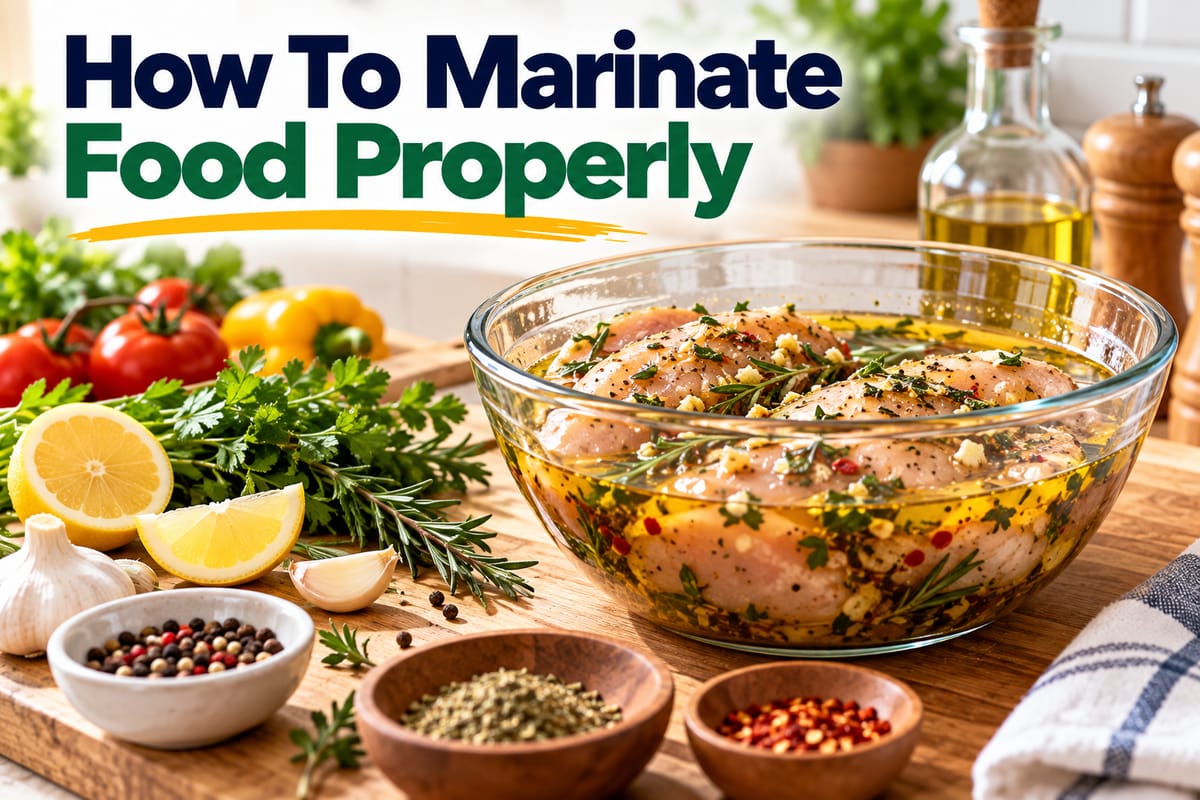
How To Marinate Food Properly
Marinating is one of the simplest ways to add flavor and improve the texture of many foods before cooking. A well-made marinade can season ingredients, introduce aromatic flavors, and, in some cases, help tenderize tougher cuts of meat or change the texture of vegetables and other foods.
The process sounds straightforward: place food in a seasoned liquid and let it sit. But good marinating involves more than simply combining ingredients. The type of food, marinade composition, marinating time, temperature, and cooking method all influence the final result.
Understanding these factors can help prevent common mistakes such as overly salty food, mushy textures, weak flavor, or unsafe handling.
What Is a Marinade?
A marinade is a seasoned mixture used to flavor food before cooking.
A typical marinade may contain several components:
- Oil
- Acid
- Salt
- Herbs
- Spices
- Aromatics
- Sweeteners
- Soy sauce or other savory ingredients
- Dairy products in some recipes
Different ingredients serve different purposes.
Oil can carry fat-soluble flavor compounds and help coat the surface of food. Salt contributes seasoning and can influence how food retains moisture. Acids such as vinegar, citrus juice, or yogurt can alter proteins and contribute brightness. Herbs, spices, garlic, ginger, chilies, and other aromatics provide flavor.
Not every marinade needs every component.
A simple mixture of oil, herbs, garlic, and salt can be effective, while another recipe might use yogurt, spices, and ginger.
How Marinating Works
Marinating affects food primarily at and near its surface.
It is a common misconception that a marinade quickly penetrates deeply into a large piece of meat. Many marinade components do not travel very far into dense foods, particularly during short marinating periods.
Instead, marinating typically has its strongest effect on the exterior.
Salt can gradually move into food through diffusion, while other compounds may penetrate to varying degrees depending on their size, concentration, the food’s structure, and the amount of time available.
This is why surface seasoning and appropriate cooking technique remain important even after marinating.
The Main Components of a Good Marinade
A balanced marinade usually combines several types of ingredients.
Oil
Oil helps coat food and can carry aromatic compounds from herbs and spices.
Common choices include:
- Olive oil
- Vegetable oil
- Canola oil
- Avocado oil
- Sesame oil
- Peanut oil
The choice depends largely on the desired flavor and cooking method.
A strongly flavored oil can become part of the character of the finished dish, while a neutral oil allows herbs and spices to stand out.
Acid
Acidic ingredients can contribute brightness and change the texture of some foods.
Common acidic ingredients include:
- Lemon juice
- Lime juice
- Vinegar
- Wine
- Tamarind
- Yogurt
Acid is particularly important to use thoughtfully.
A highly acidic marinade left in contact with delicate foods for too long can produce an undesirable texture rather than simply making the food more tender.
Salt
Salt is one of the most important seasoning ingredients in a marinade.
It enhances flavor and can influence the way food interacts with moisture.
Common sources include:
- Table salt
- Sea salt
- Kosher salt
- Soy sauce
- Miso
- Fish sauce
Because several ingredients may already contain sodium, it is important to consider the total amount rather than adding salt automatically.
Herbs and Spices
Herbs and spices provide much of a marinade’s distinctive character.
Examples include:
- Rosemary
- Thyme
- Oregano
- Basil
- Coriander
- Cumin
- Paprika
- Black pepper
- Chili
- Turmeric
- Fennel
For a deeper look at how seasonings interact with other flavors, How Seasoning Changes Flavor and Balance in Home Cooking explains how salt, herbs, spices, and other ingredients can shape the final taste of a dish.
Choosing Ingredients for a Marinade
The ingredients in a marinade should complement the food rather than overpower it.
A mild fish may benefit from delicate herbs, citrus, and a small amount of oil. Chicken can work with a much wider range of flavors, including garlic, herbs, spices, yogurt, or soy-based mixtures. Beef can pair well with stronger ingredients such as garlic, black pepper, soy sauce, ginger, or wine.
Vegetables can also be marinated.
Mushrooms, zucchini, eggplant, peppers, onions, and other vegetables can absorb surface flavors before grilling, roasting, or another cooking method.
The Cooking Ingredients Guide: Types, Uses, Substitutions and Storage provides broader guidance on selecting, using, storing, and substituting cooking ingredients.
How Long Should Food Be Marinated?
There is no universal marinating time.
The appropriate period depends on:
- The type of food
- The size of the pieces
- The ingredients in the marinade
- The desired flavor
- The acidity of the mixture
- The texture of the food
- The cooking method
Small pieces generally expose more surface area to the marinade than large pieces.
Delicate foods may require only a short period, while larger and denser foods can benefit from longer exposure.
Longer is not automatically better.
A highly acidic marinade, for example, can eventually affect the texture of some foods in an undesirable way.
Marinating Meat
Meat is one of the most common foods to marinate.
Marinades can provide surface flavor and may affect the texture of certain cuts.
For tougher cuts, ingredients such as salt, acids, enzymes, or dairy-based mixtures may contribute to changes in the outer layers.
However, a marinade cannot transform every tough cut into a tender one.
Tenderness also depends on factors such as:
- The animal cut
- Connective tissue
- Cooking temperature
- Cooking time
- Cutting direction
- Resting after cooking
Marinating should therefore be viewed as one part of preparing meat rather than a complete solution for tenderness.
Marinating Chicken
Chicken works well with many different marinade styles.
For example, a marinade could combine:
- Olive oil
- Lemon juice
- Garlic
- Paprika
- Black pepper
- Dried herbs
- Salt
Another approach might use yogurt, ginger, garlic, and spices.
Chicken pieces with more exposed surface area can pick up flavors efficiently.
Because chicken is often cooked thoroughly, the marinade should complement the final cooking method rather than contain ingredients that will burn easily during high-heat cooking.
Marinating Beef
Beef can accommodate stronger marinades.
Possible ingredients include:
- Soy sauce
- Garlic
- Ginger
- Black pepper
- Sesame oil
- Worcestershire sauce
- Vinegar
- Red wine
- Herbs
The best combination depends on the cut and intended dish.
A marinade for thin strips of beef may differ substantially from one used for a large steak or roast.
For thin pieces, a relatively short marinating period can be sufficient because there is considerable surface area relative to the amount of meat.
Marinating Pork
Pork can work well with both savory and sweet flavors.
Common combinations include:
- Garlic and herbs
- Mustard and honey
- Soy sauce and ginger
- Citrus and chili
- Apple-based flavors
- Vinegar and spices
When a marinade contains sugar or honey, the cooking method should be considered carefully because these ingredients can brown or burn quickly at high temperatures.
Marinating Fish and Seafood
Fish and seafood require more care because their texture can be delicate.
Acidic marinades can change the proteins in fish relatively quickly. Citrus juice, for example, can produce a texture similar to cooked fish even without heat.
This is one reason seafood should generally not be left in strongly acidic marinades indefinitely.
For many fish dishes, a short marinating period can provide enough flavor.
The marinade should complement the natural character of the seafood rather than overwhelm it.
Marinating Vegetables
Vegetables can also benefit from marinating.
Good candidates include:
- Mushrooms
- Bell peppers
- Zucchini
- Eggplant
- Onions
- Cauliflower
- Artichokes
Marinated vegetables can be grilled, roasted, baked, or cooked using other methods.
Because vegetables have different structures and water content, they do not all respond to marinades in the same way.
Dense vegetables may benefit from longer exposure, while softer vegetables can become overly saturated or lose their desirable texture if left too long.
Marinating Tofu
Tofu is particularly useful for marinades because its flavor is relatively mild.
A marinade can include:
- Soy sauce
- Sesame oil
- Garlic
- Ginger
- Chili
- Rice vinegar
- Maple syrup or another sweetener
Firm or extra-firm tofu generally works better for marinating than very soft varieties when the food needs to retain its shape.
Pressing excess water from tofu before marinating can also help improve its ability to take on flavor and achieve a better cooking texture.
Should You Poke Holes in Food?
Some recipes recommend piercing meat with a fork so the marinade can enter more deeply.
This technique can increase the amount of marinade reaching some interior areas, but it is not always necessary.
For many foods, cutting them into smaller pieces or using a marinade with appropriate seasoning may be more effective.
Piercing meat can also create additional opportunities for surface microorganisms to be transferred into the interior.
Good food-handling practices therefore remain important.
Marinating in the Refrigerator
Perishable foods should be marinated under appropriate refrigerated conditions rather than left sitting at room temperature.
This is particularly important for:
- Raw meat
- Poultry
- Fish
- Seafood
- Other perishable ingredients
Refrigeration slows microbial growth while the food is being prepared.
The Complete Guide to Food Safety provides broader guidance on safe food handling, storage, preparation, and temperature control.
A marinade should never be treated as a substitute for proper refrigeration.
Use a Suitable Container
Food should be marinated in a clean container that is appropriate for contact with the ingredients.
Glass, food-safe plastic, stainless steel, and suitable food-storage containers are common choices.
Highly acidic marinades can interact with some materials, so choosing an appropriate food-safe container is important.
A resealable food-safe bag can also work well because the marinade can surround the food evenly.
Whatever container is used, it should be clean and able to contain the marinade securely.
Turn the Food During Marinating
If practical, turning food during marinating can help distribute the mixture across the surface.
For example, meat placed in a shallow container can be turned partway through the marinating period.
A sealed food-safe bag can also make it easier to coat the food evenly.
This does not mean the marinade will penetrate deeply into every part of the food, but good surface coverage can improve consistency.
Do Not Reuse Marinade From Raw Food
One of the most important safety rules is to avoid using marinade that has been in direct contact with raw meat, poultry, or seafood as a finished sauce unless it is properly cooked first.
Raw food can transfer microorganisms into the marinade.
Simply pouring that used marinade over cooked food can transfer those microorganisms back onto the finished dish.
If a marinade is intended to become a sauce, a safer approach is to reserve a separate portion before the raw food is added.
Alternatively, the used marinade must be handled and cooked appropriately according to safe food-preparation practices.
Can You Use Marinade as a Sauce?
Yes, but the distinction between unused and used marinade matters.
If a portion was reserved before touching raw food, it can be used as a sauce according to the recipe.
If the marinade has been in contact with raw meat, poultry, or seafood, it should not be served directly.
Cooking can reduce microbial hazards, but simply heating a sauce casually may not provide the same controlled conditions as following an established cooking process.
Separating marinade for sauce use before adding raw food is often the simplest approach.
How to Avoid an Overly Salty Marinade
Salt is important, but too much can overpower the entire dish.
Several marinade ingredients may already contain significant sodium, including:
- Soy sauce
- Fish sauce
- Miso
- Worcestershire sauce
- Prepared seasoning blends
When combining several of these ingredients, taste the marinade when appropriate and consider the total amount of salt.
Keep in mind that raw meat and other foods will not necessarily taste exactly like the marinade itself after cooking.
The final flavor depends on how much seasoning remains on the surface, how much is absorbed, and how the food is cooked.
Balancing Sweet, Sour, Salty, and Savory Flavors
A good marinade often has a balance of several flavor elements.
For example:
Salt: Provides seasoning and enhances other flavors.
Acid: Adds brightness and sharpness.
Sweetness: Can balance acidity and encourage browning.
Fat: Carries certain flavors and coats the food.
Aromatics: Add depth and character.
Spices: Provide heat, warmth, earthiness, or complexity.
The goal is not necessarily to make every component equally strong.
Instead, the ingredients should work together to create the intended flavor profile.
Consider the Cooking Method
The cooking method should influence the marinade.
A marinade intended for grilling may need to behave differently from one used before steaming or gentle baking.
Sugar-rich marinades can brown rapidly during high-heat cooking. Fresh herbs may char. Excess marinade can interfere with browning if food is placed on a very hot cooking surface while heavily coated.
Before cooking, excess marinade can sometimes be allowed to drain from the food so that the surface can brown more effectively.
The choice of cooking technique also influences the final texture and flavor. Cooking Methods Explained: The Complete Guide provides a broader look at how different cooking methods affect food.
Patting Food Dry Before Cooking
For techniques such as grilling, roasting, searing, or pan-frying, surface moisture can affect browning.
If food is heavily coated in wet marinade, the surface may initially steam rather than brown.
Depending on the recipe, gently removing excess marinade or patting the food’s surface dry can help improve browning.
This does not mean removing all of the marinade’s flavor. The food should retain enough seasoning to achieve the intended result.
The right approach depends on the cooking method.
Avoid Over-Marinating
More time does not always produce more flavor.
Highly acidic mixtures can alter the surface texture of proteins. Salt can eventually produce an overly seasoned result. Delicate foods may become soft or mushy.
A marinade should therefore be matched to the food and used for an appropriate amount of time.
For many everyday recipes, following the recommended marinating period is preferable to assuming that leaving the food overnight will automatically improve it.
Marinating at Room Temperature
Leaving perishable food at room temperature for extended periods is not a safe shortcut.
Raw meat, poultry, seafood, and other perishable foods should be kept under appropriate refrigerated conditions while marinating.
The acidity of a marinade does not automatically make raw food safe at room temperature.
Vinegar, lemon juice, salt, and spices can contribute to flavor and preservation in particular culinary contexts, but they should not be relied upon to eliminate all food-safety risks associated with raw ingredients.
Common Marinating Mistakes
Several mistakes can reduce the quality or safety of a marinated dish.
Using Too Much Acid
Excess acid can produce an unpleasant texture, especially with delicate proteins.
Marinating for Too Long
Extended exposure is not always beneficial and can make some foods overly soft or intensely seasoned.
Forgetting Salt in the Marinade
A marinade can contain many flavors but still produce bland food if there is not enough seasoning.
Using Too Much Salt
The opposite problem can make the finished food difficult to enjoy.
Leaving Perishable Food Unrefrigerated
Room-temperature marinating can increase food-safety risks.
Reusing Raw Marinade
Used marinade can contain microorganisms from raw ingredients.
Applying Too Much Wet Marinade Before High-Heat Cooking
Excess liquid can interfere with browning and may cause splattering.
Ignoring the Food’s Texture
Delicate foods often need different treatment from dense cuts of meat.
A Simple Marinade Formula
A flexible marinade does not need a complicated ingredient list.
A basic formula can combine:
- A source of fat
- A source of acidity
- Salt or a salty ingredient
- Aromatics
- Herbs or spices
- Optional sweetness
For example:
Oil + acid + salt + garlic + herbs + spices
The proportions can be adjusted according to the food and recipe.
For a sweeter profile, a small amount of honey or another sweetener can be added.
For an Asian-inspired profile, soy sauce, ginger, sesame oil, garlic, and rice vinegar may work well.
For Mediterranean-style flavors, olive oil, lemon, garlic, oregano, and black pepper provide a familiar combination.
How to Marinate Food Step by Step
A reliable process can be surprisingly simple.
Step 1: Choose the Food
Select meat, poultry, seafood, tofu, vegetables, or another ingredient that suits the marinade.
Step 2: Prepare the Marinade
Combine the ingredients thoroughly so the flavors are distributed evenly.
Step 3: Place the Food in a Suitable Container
Use a clean food-safe container or suitable resealable bag.
Step 4: Coat the Food
Make sure the marinade covers the food as evenly as practical.
Step 5: Refrigerate When Required
Keep perishable ingredients refrigerated throughout the marinating period.
Step 6: Follow an Appropriate Marinating Time
Avoid assuming that longer is always better.
Step 7: Prepare for Cooking
Remove excess marinade if appropriate for the cooking method.
Step 8: Cook the Food Properly
Use the appropriate cooking method and temperature for the ingredient.
Step 9: Handle Leftover Marinade Safely
Discard marinade that has contacted raw food unless it is properly cooked for a suitable use.
How Marinades Affect Different Foods
Different ingredients respond to marinades in different ways.
| Food | Common Marinade Approach | Main Consideration |
|---|---|---|
| Chicken | Oil, acid, herbs, spices | Balance flavor and cooking time |
| Beef | Soy, herbs, garlic, spices | Match marinade to cut |
| Pork | Sweet, savory, acidic combinations | Watch sugars during high heat |
| Fish | Citrus, herbs, oil | Avoid excessive acidic exposure |
| Vegetables | Oil, herbs, spices, vinegar | Preserve desired texture |
| Tofu | Soy, aromatics, spices | Use firm tofu for better structure |
This is why there is no single perfect marinade for every ingredient.
Marinating as Part of the Cooking Process
Marinating should not be considered an isolated step.
It works together with ingredient selection, seasoning, cooking technique, temperature, and food safety.
A flavorful marinade cannot compensate for poor cooking technique. Similarly, an excellent cooking method cannot completely rescue food that has been excessively salted or marinated for too long.
The best results come from considering the entire process from preparation through serving.
Bringing Flavor Into the Food Preparation Process
Marinating gives cooks a flexible way to develop flavor before food reaches the pan, oven, grill, or other cooking surface.
The most useful approach is to understand what each component contributes. Oil can carry flavor and coat ingredients, salt seasons and influences moisture, acid adds brightness and can alter texture, while herbs and spices create the character of the dish.
From there, the cook can adjust the mixture to suit the food, keep perishable ingredients properly chilled, use an appropriate marinating period, and select a cooking method that complements the marinade.
When those details are handled together, marinating becomes more than simply soaking food. It becomes a controlled step in building flavor, texture, and a well-balanced finished meal.