How to Manage Everyday Responsibilities as an Adult
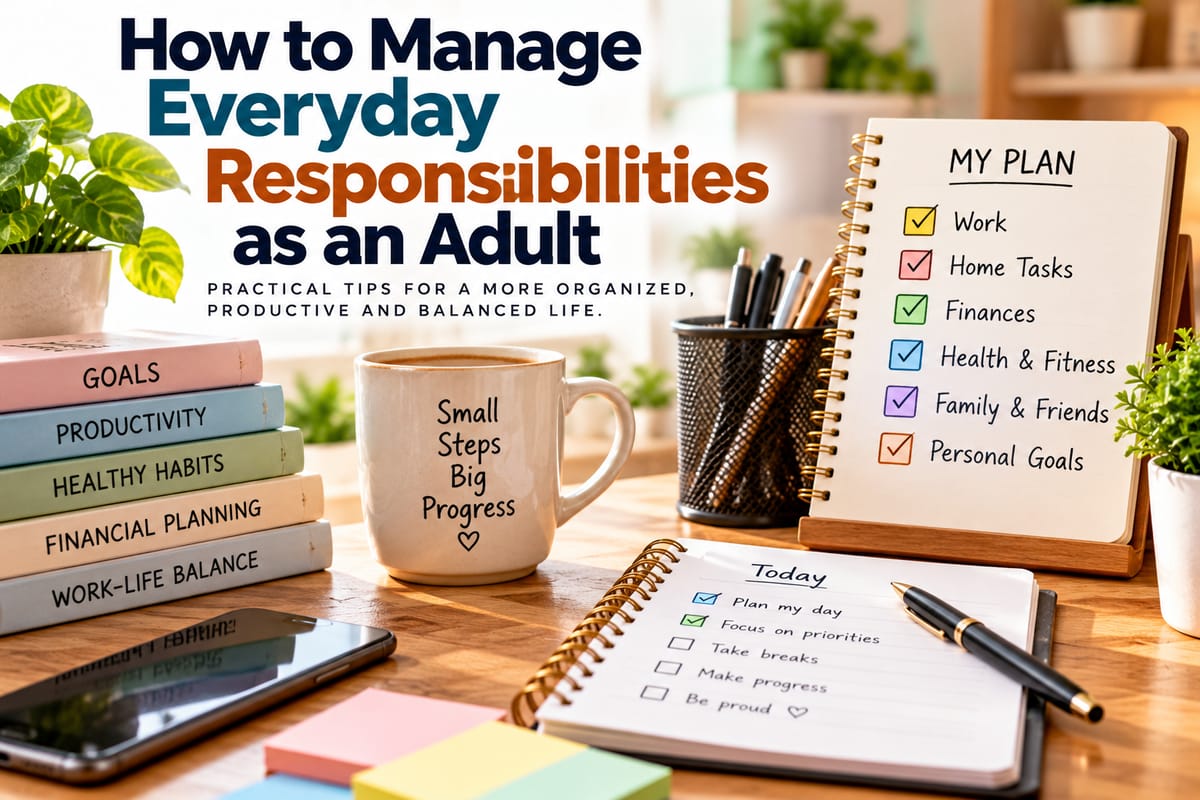
How to Manage Everyday Responsibilities as an Adult
Adult life can involve a constant stream of responsibilities. Work, household tasks, finances, appointments, relationships, errands, personal goals, and unexpected problems can all compete for attention.
The challenge is not necessarily having too many responsibilities. In many cases, the bigger challenge is managing them without allowing everything to feel urgent at the same time.
A practical system can make everyday responsibilities easier to organize and complete. Instead of relying entirely on memory or trying to handle everything immediately, adults can use routines, priorities, calendars, lists, and realistic schedules to create more structure.
Understand What Needs Your Attention
The first step in managing responsibilities is knowing what actually needs to be done.
Responsibilities can generally be divided into several categories:
- Work and professional commitments
- Household maintenance
- Financial obligations
- Health and personal care
- Family and relationships
- Appointments and administrative tasks
- Personal development
- Recreation and social activities
Writing these responsibilities down can make them easier to understand. A task that feels overwhelming when it remains in your head can become much more manageable when it is separated into individual actions.
Separate Urgent Tasks From Important Tasks
Not every responsibility has the same level of urgency.
A bill that is due today requires different attention from a long-term home improvement project. An upcoming medical appointment needs to be scheduled differently from a hobby that can be pursued whenever time is available.
A simple priority system can divide tasks into:
- Urgent and important: Handle these as soon as reasonably possible.
- Important but not urgent: Schedule time for these.
- Urgent but less important: Complete quickly or consider delegating them.
- Neither urgent nor important: Reduce, postpone, or eliminate them when appropriate.
This distinction can prevent less important tasks from constantly pushing meaningful long-term responsibilities aside.
Create a Reliable Organization System
Good organization does not require an elaborate productivity system.
The important thing is having a consistent place to record responsibilities so that important information does not depend entirely on memory.
A useful system might include:
- A calendar for appointments and deadlines
- A task list for things that need action
- A notes system for information that needs to be remembered
- Folders for important documents
- Reminders for recurring responsibilities
- A weekly review of upcoming commitments
Learning how to improve personal organization skills can provide additional ideas for creating systems that make everyday responsibilities easier to manage.
Use a Calendar for Time-Sensitive Commitments
A calendar is particularly useful for anything that must happen at a specific time.
Appointments, meetings, deadlines, travel, events, bill due dates, and scheduled maintenance can all be placed on a calendar.
Instead of simply remembering that something needs to happen next week, a calendar gives the responsibility a specific place in time.
It can also help reveal scheduling conflicts before they become problems.
Build a Practical Daily Routine
A daily routine can reduce the number of decisions required throughout the day.
For example, a morning routine might include:
- Getting ready for the day
- Reviewing the calendar
- Checking the day’s priorities
- Preparing meals or supplies
- Handling a quick household task
An evening routine might involve:
- Reviewing unfinished tasks
- Preparing for the next day
- Cleaning key areas
- Checking upcoming appointments
- Setting out anything needed in the morning
A routine should provide structure without becoming so rigid that ordinary disruptions make it impossible to maintain.
Manage Time Realistically
One of the most common problems with managing responsibilities is underestimating how long tasks take.
A task that appears to require 20 minutes may actually take 40 minutes once preparation, interruptions, and cleanup are considered.
A useful time management guide can help with planning work, estimating available time, prioritizing activities, and creating more realistic schedules.
When planning a day, it is also important to leave some unscheduled time. A calendar filled completely from morning to night leaves little room for unexpected responsibilities.
Break Large Responsibilities Into Smaller Tasks
Large responsibilities often feel difficult because they contain multiple smaller tasks.
For example, “organize the house” is vague. It could involve sorting clothing, clearing paperwork, cleaning the kitchen, organizing storage, and deciding what to donate or discard.
Breaking it into smaller actions makes the responsibility more concrete.
Instead of writing:
Organize the house
a task list might say:
- Sort the entryway
- Organize kitchen cabinets
- File important paperwork
- Sort unused clothing
- Clear one storage area
Completing individual tasks can create visible progress without requiring an entire project to be finished at once.
Establish Recurring Household Routines
Many adult responsibilities happen repeatedly.
Laundry, grocery shopping, cleaning, bill payments, meal preparation, and household maintenance can become easier when they are connected to regular routines.
For example, a household might designate particular days for:
- Grocery planning
- Laundry
- Cleaning
- Financial reviews
- Meal preparation
- Administrative tasks
Recurring routines reduce the need to repeatedly decide when basic responsibilities should happen.
Automate What Can Be Automated
Automation can reduce the mental effort associated with repetitive responsibilities.
Where appropriate, adults can use tools such as:
- Automatic bill payments
- Calendar reminders
- Recurring digital tasks
- Subscription management
- Automatic savings transfers
- Digital document storage
- Medication or appointment reminders
Automation should be reviewed periodically. A recurring payment or subscription that is no longer needed can continue creating unnecessary expenses if it is never checked.
Keep Important Documents Organized
Important documents can become difficult to locate when they are scattered across drawers, email accounts, folders, and devices.
Create a simple organization system for documents such as:
- Identification records
- Financial statements
- Insurance information
- Employment documents
- Property records
- Education records
- Medical information
- Important contracts
Digital files should also have clear names and logical folders.
The objective is not to create a complicated filing system. It is to make important information easy to locate when needed.
Manage Household Finances Regularly
Financial responsibilities are easier to manage when they receive regular attention rather than only being addressed when something goes wrong.
A simple financial routine might include:
- Reviewing account balances
- Checking upcoming bills
- Tracking major expenses
- Reviewing subscriptions
- Monitoring debt payments
- Checking savings progress
- Planning for upcoming large expenses
A short weekly or monthly financial review can help identify problems earlier.
Avoid Keeping Everything in Your Head
Mental reminders are easy to forget, particularly when several responsibilities compete for attention.
Writing something down does more than create a record. It can also reduce the mental effort involved in constantly remembering what needs to happen.
A task list can be as simple as:
Today
- Pay electricity bill
- Buy groceries
- Send work document
This week
- Schedule appointment
- Clean storage area
- Review budget
Later
- Compare insurance options
- Plan holiday
- Organize old files
The system matters less than consistently using it.
Learn to Delegate When Appropriate
Managing responsibilities does not mean doing everything personally.
Some household or professional responsibilities can be shared, delegated, outsourced, or completed collaboratively.
For example, family members can divide household tasks according to availability and ability. At work, appropriate tasks can be assigned to colleagues when responsibilities allow it.
Delegation can create more time for tasks that genuinely require personal attention.
Learn to Say No
An overloaded schedule is often created by accepting too many commitments.
Saying no does not necessarily mean being unhelpful or antisocial. It can mean recognizing that time and energy are limited resources.
Before accepting another commitment, consider:
- Does this fit my current priorities?
- How much time will it require?
- Is there already something else scheduled?
- What would I have to postpone?
- Am I agreeing because I genuinely want to or because I feel pressured?
Protecting available time can make existing responsibilities easier to manage.
Create a Weekly Planning Session
A short weekly review can provide a useful overview of upcoming responsibilities.
During the review, look at:
- Upcoming appointments
- Work deadlines
- Bills
- Household tasks
- Social commitments
- Personal goals
- Important errands
- Potential scheduling conflicts
The goal is not to plan every minute. It is to understand what is coming and decide what deserves attention.
Leave Room for Unexpected Problems
Even a well-organized schedule can be disrupted.
A vehicle may need repairs. A child may become sick. A work problem may require additional time. A household appliance may stop working.
A practical schedule therefore needs some flexibility.
Leaving open time during the week can provide room to handle unexpected events without completely disrupting everything else.
Avoid Overloading Your To-Do List
A long list can create the illusion of productivity while making it difficult to identify what actually matters.
Instead of creating a list containing dozens of tasks, identify a small number of meaningful priorities for the day.
For example:
Today’s three priorities:
- Complete an important work assignment.
- Pay the household bills.
- Attend a scheduled appointment.
Other tasks can still be completed if time allows, but the most important responsibilities have already been identified.
Create Systems Instead of Relying on Motivation
Motivation can change from one day to another.
Systems are generally more dependable.
For example, instead of deciding every evening whether to prepare for the next day, make preparation part of the normal evening routine.
Instead of trying to remember every bill, use reminders or automated payments.
Instead of deciding when to clean each week, establish a recurring schedule.
Small systems can turn repeated decisions into habits.
Protect Time for Personal Needs
Responsibilities should not consume every available hour.
Adults also need time for rest, relationships, hobbies, physical activity, learning, and personal interests.
Making space for these activities is not necessarily a distraction from responsibility. Maintaining personal well-being can make it easier to handle responsibilities consistently.
A balanced approach recognizes that life contains more than work and chores.
Build a Lifestyle Around Real Priorities
Managing responsibilities becomes easier when everyday routines reflect what actually matters.
The Complete Guide to Lifestyle Design and Personal Living explores how routines, priorities, environment, relationships, and personal goals can be considered together when shaping everyday life.
For example, someone who values family time may need to protect evenings or weekends from unnecessary commitments. Someone focused on professional development may deliberately reserve time for learning.
Organization is most useful when it supports meaningful priorities rather than simply filling every available space on a calendar.
Keep Balance in Perspective
There will be periods when one responsibility naturally receives more attention than others.
A major work deadline may temporarily reduce available leisure time. Moving to a new home may require additional household effort. Family circumstances may change daily priorities.
Balance does not mean giving every area of life exactly the same amount of attention.
The Complete Guide to Living a Balanced Lifestyle provides a broader perspective on maintaining different areas of life while recognizing that priorities can change over time.
Review What Is and Is Not Working
An organization system should not be treated as permanent.
If a particular routine repeatedly fails, it may need to change.
Ask questions such as:
- Which responsibilities do I regularly forget?
- Where do tasks accumulate?
- Which routines feel unnecessarily complicated?
- What takes more time than expected?
- Which commitments could be reduced?
- What could be automated or delegated?
The answers can reveal where a system needs improvement.
Make Everyday Life Easier Through Small Changes
Managing adult responsibilities does not require perfect discipline or a complicated productivity system.
A calendar, a reliable task list, recurring routines, realistic schedules, and regular reviews can provide a strong foundation. From there, adults can gradually automate repetitive tasks, organize important information, delegate when appropriate, and protect time for personal needs.
The objective is not to control every minute of the day. It is to create enough structure that important responsibilities are handled while leaving room for flexibility, relationships, rest, and the unexpected events that are simply part of everyday life.