València Design Fair 2026 Reveals the Interior Design Trends Shaping Homes Next
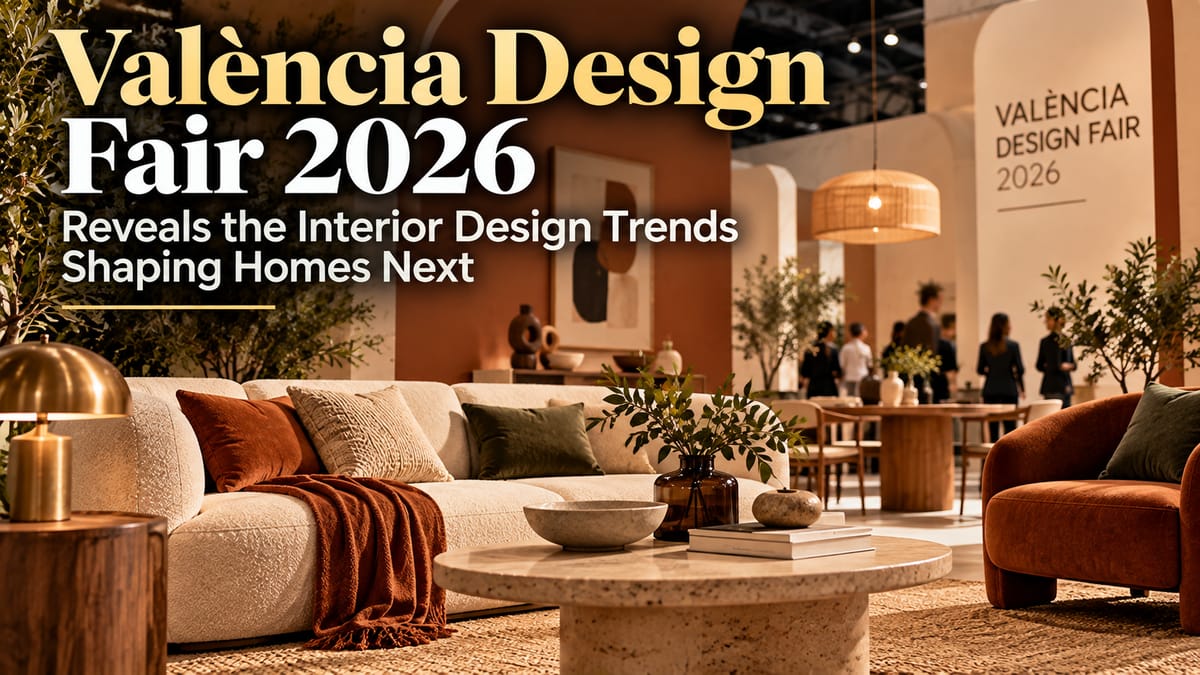
València Design Fair 2026 Reveals the Interior Design Trends Shaping Homes Next
València is once again putting interior design in the spotlight as the 2026 edition of València Inspira Diseño brings furniture, lighting, textiles, decoration, architecture, craftsmanship, and emerging design together in one of Europe’s most closely watched design gatherings.
Running from September 28 through October 1, 2026, the event combines Feria Hábitat València with Textilhogar, Espacio Cocina SICI, nude, and other design-focused programs. Together, they create a broad look at how designers and manufacturers are approaching the future of residential interiors.
And the message emerging from the fair is becoming increasingly clear: homes are moving away from interiors that feel overly uniform or purely minimalist and toward spaces that are warmer, more personal, tactile, flexible, and connected to nature.
The trends appearing across furniture, lighting, materials, textiles, and decorative products suggest that the next phase of interior design will be less about following one dominant aesthetic and more about creating environments that feel individual.
Comfort Is Becoming a Design Priority
One of the strongest themes emerging from València is a renewed emphasis on comfort.
Furniture is becoming softer and more inviting, while fabrics, upholstery, rugs, lighting, and accessories are being used to create spaces that encourage people to stay, relax, and interact.
This represents a shift from the idea that a sophisticated home needs to look formal or highly controlled.
Instead, designers are exploring how sophistication and comfort can coexist.
That philosophy closely reflects the movement described in Layered Comfort Is Taking Over, where interiors become more appealing through the combination of different textures, materials, lighting sources, and furnishings.
The result is a home that feels collected rather than staged.
Brown and Darker Natural Tones Gain Ground
Color is another area where the direction of interiors appears to be changing.
For years, white, gray, beige, and other restrained neutrals dominated contemporary interiors. València’s 2026 design landscape is showing greater interest in deeper earthy shades, particularly brown and dark natural wood.
An iF Design review of Feria Hábitat València 2026 highlighted the growing presence of brown tones and darker natural woods, including new furniture and kitchen finishes built around richer shades.
The change does not necessarily mean that neutral interiors are disappearing.
Instead, neutral palettes are becoming warmer.
Deep brown, mocha, walnut, terracotta, clay, olive, and other earthy colors can create a sense of depth without requiring an interior to become visually overwhelming.
For homeowners, this opens up more possibilities for creating rooms that feel grounded and comfortable.
Natural Materials Become More Important
Nature is another major influence on the designs appearing at València.
Wood, stone, ceramics, natural fibers, and other tactile materials are being used to create stronger connections between interiors and the natural world.
The trend reflects more than an interest in appearance.
Natural materials can introduce variation, texture, imperfections, and visual warmth that mass-produced synthetic surfaces sometimes struggle to replicate.
València Inspira Diseño’s 2026 programming has specifically highlighted nature, wellbeing, versatility, and personalization among the major themes shaping new collections.
That combination is significant because it suggests that biophilic thinking is expanding beyond simply adding houseplants to a room.
The materials themselves can become part of the connection with nature.
Craftsmanship Is Moving Back Into the Spotlight
Another important development is the renewed interest in craftsmanship.
Feria Hábitat València continues to give space to artisan design, with the event describing craftsmanship as a form of new luxury. Its 2026 program also brings together furniture, lighting, decorative products, textiles, and emerging designers.
This reflects a broader change in how people think about luxury interiors.
Luxury does not necessarily have to mean expensive-looking finishes or perfectly matched furniture.
A handcrafted table, unusual ceramic object, woven textile, sculptural light, or locally produced piece can give a room more personality because it carries evidence of the person and process behind it.
That makes craftsmanship particularly useful in homes where individuality matters more than creating a showroom-like appearance.
Personalization Replaces Perfect Matching
One of the clearest directions emerging from the event is the growing importance of personalization.
Rather than purchasing an entire room as a coordinated collection, homeowners are increasingly combining furniture and accessories from different periods, materials, designers, and styles.
This creates interiors that tell a story.
A modern sofa might sit beside a vintage cabinet. A contemporary light could hang above an antique dining table. Handmade ceramics might share a shelf with mass-market objects or family heirlooms.
The resulting room can feel less predictable because every item does not have to follow exactly the same design language.
The organizers of València Inspira Diseño have identified personalization and versatility alongside nature and wellbeing as important characteristics of current collections.
Lighting Becomes More Sculptural
Lighting continues to evolve from a purely functional element into an important decorative feature.
Designers are increasingly treating lamps as objects that contribute to the character of a room even when they are switched off.
Sculptural silhouettes, unusual materials, portable lighting, oversized pendants, wall lights, and layered illumination all allow homeowners to shape the atmosphere of a space.
This is particularly important as rooms become more multifunctional.
A living room might serve as a place for watching television, working, reading, entertaining, and relaxing. Instead of relying on one ceiling fixture, multiple sources of light can create different zones within the same room.
The approach also complements the wider movement toward layered interiors.
Textiles Are Doing More Than Adding Color
Textiles are becoming increasingly important to the overall sensory experience of an interior.
Textilhogar 2026, held alongside Feria Hábitat València, brings together upholstery, decorative textiles, wall coverings, and other materials designed for both residential and contract environments.
This means walls, furniture, windows, floors, and soft furnishings can all contribute to the same design narrative.
Textiles also provide one of the easiest ways for homeowners to experiment.
Changing curtains, cushions, rugs, throws, or upholstery can dramatically alter the atmosphere of a room without requiring a complete renovation.
Texture is particularly important because it can make a relatively simple color palette feel much richer.
Flexible Furniture Fits Changing Homes
The modern home increasingly needs to perform several functions.
Living rooms can become offices. Dining areas can double as workspaces. Spare bedrooms can function as guest rooms, exercise areas, or creative studios.
That is increasing demand for furniture that can adapt.
València’s emphasis on versatility reflects this change.
Instead of designing products around one fixed use, manufacturers are exploring pieces that can move, transform, combine, separate, or serve different purposes.
Modular sofas are one example. Movable tables, flexible shelving, multifunctional storage, and adaptable lighting can provide similar benefits.
This approach is particularly useful in apartments and smaller homes, where every square meter has to work harder.
Kitchens Become More Integrated With Living Spaces
The kitchen is also becoming increasingly connected to the rest of the home.
Rather than functioning as an isolated work area, modern kitchens are often designed as social spaces where cooking, eating, working, and conversation happen together.
The presence of Espacio Cocina SICI within València Inspira Diseño reinforces the importance of the kitchen as part of the broader design ecosystem. The 2026 event brings kitchen furniture and equipment together with furniture, textiles, lighting, decoration, and architectural materials.
This integration encourages designers to think about kitchens in relation to the surrounding interior rather than as a separate category.
Materials, colors, lighting, storage, and furniture can therefore flow between kitchen and living areas.
Technology Is Becoming More Invisible
Technology remains an important part of modern interiors, but the design approach is changing.
Rather than making technology the visual centerpiece, designers are increasingly interested in integrating it discreetly.
Smart lighting, connected appliances, energy-management systems, automated shading, and other technologies can support daily life without dominating the appearance of a room.
The broader València design program also includes discussions around digitalization, artificial intelligence, virtual and augmented reality, and energy efficiency within architecture and construction.
This suggests that the future smart home may be less about displaying technology and more about making technology work quietly in the background.
Wellbeing Becomes Part of Interior Design
Interior design is also becoming more closely connected to wellbeing.
Comfortable furniture, natural materials, better lighting, acoustic treatments, flexible spaces, and calmer color palettes can all influence how people experience their homes.
This does not mean every home needs to become a minimalist wellness retreat.
Instead, designers are increasingly considering how environments support everyday activities and emotional comfort.
A bedroom can be designed to feel restful. A living room can encourage social interaction. A home office can support concentration. A bathroom can provide a sense of privacy and relaxation.
Design becomes less about creating a photograph and more about supporting the people who actually live there.
Small Details Create More Character
Another important lesson from the direction of contemporary design is that personality often comes from details.
A room does not necessarily need dramatic furniture or an elaborate renovation to feel distinctive.
Objects, artwork, textiles, lighting, ceramics, books, vintage pieces, plants, and personal collections can all contribute.
This approach also makes interiors easier to evolve.
Instead of replacing an entire room whenever tastes change, homeowners can gradually introduce new pieces while keeping elements they already love.
The result is a home that develops over time rather than one that is completed all at once.
Sustainability Moves Beyond a Trend
Sustainability is also becoming increasingly integrated into design conversations.
Long-lasting materials, responsible production, reuse, repairability, and efficient buildings are becoming important considerations alongside aesthetics.
València’s 2026 programming includes discussions around industrialized construction, sustainability, digital processes, energy efficiency, and intelligent management of building life cycles.
There is also growing interest in materials that reveal where they come from and how they were made.
This can encourage homeowners to think more carefully about what they purchase.
Instead of asking only whether a piece looks good, consumers may increasingly consider whether it is durable, repairable, responsibly produced, or likely to remain useful for many years.
The End of One-Style Interiors
Perhaps the most important message coming out of València is that there is no single look defining the future of the home.
Warm colors can coexist with modern architecture.
Vintage furniture can work alongside contemporary pieces.
Technology can exist alongside handmade materials.
Minimal spaces can include expressive artwork and decorative objects.
Natural materials can be paired with sophisticated finishes.
The emerging direction is therefore less about replacing one trend with another and more about creating interiors with greater depth and flexibility.
What València Design Could Mean for Homes in 2027
The trends emerging from València Inspira Diseño point toward a residential interior that feels warmer, more tactile, more adaptable, and more personal.
Brown and earthy tones are challenging the dominance of cooler neutrals. Natural materials are strengthening the connection between homes and the outdoors. Craftsmanship is adding character. Textiles are increasing sensory depth. Flexible furniture is responding to changing lifestyles, while lighting and technology are becoming increasingly sophisticated.
Most importantly, personalization is becoming central to the way designers think about the home.
The future interior may not be defined by a single color palette, furniture style, or decorating philosophy. Instead, it is likely to be shaped by how successfully a space combines comfort, function, personality, craftsmanship, technology, and a stronger connection to the natural world.
València’s 2026 design scene offers an early look at that direction: homes are becoming less about perfection and more about creating spaces that feel genuinely lived in.