Wildfire-Resilient Home Improvements Take Center Stage as Homeowners Rethink Exterior Protection
Wildfire-Resilient Home Improvements Take Center Stage as Homeowners Rethink Exterior Protection
Wildfire risk is changing the way homeowners think about exterior home improvements. In areas exposed to dry vegetation, strong winds and recurring wildfire threats, traditional maintenance is increasingly being combined with measures designed to reduce the chances of a home igniting from embers, radiant heat or nearby flames.
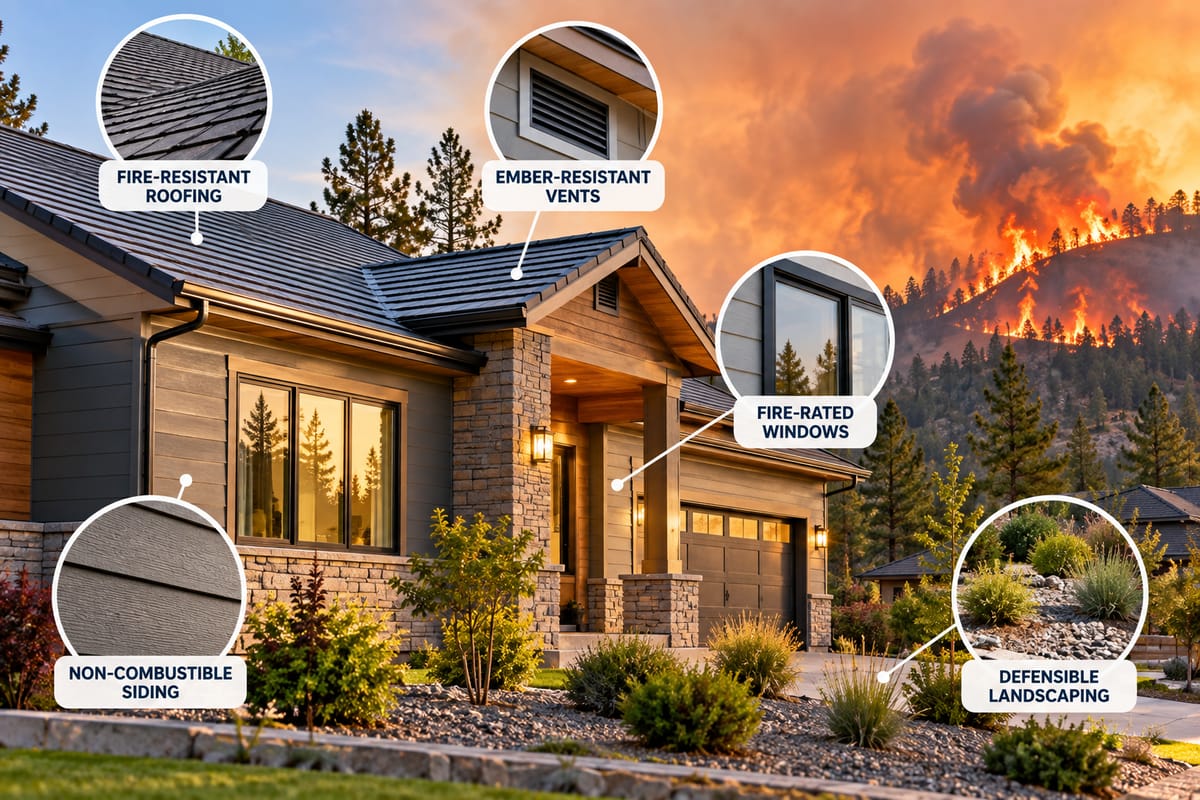
The shift is not limited to replacing a roof or installing different siding. A wildfire-resilient home involves an interconnected system that can include the roof, walls, windows, doors, vents, decks, gutters, landscaping and the space immediately surrounding the property.
Federal wildfire guidance emphasizes that embers can travel significant distances and reach homes even when the main fire front is not immediately adjacent to the property. Embers can land on roofs and decks, enter through vents or accumulate in combustible vegetation and debris around a structure.
That makes exterior protection an increasingly important part of long-term home improvement planning.
Why Wildfire Resilience Is Becoming a Home Improvement Priority
For decades, many homeowners have approached exterior improvements primarily through the lens of weather protection, appearance, energy efficiency and maintenance costs.
Wildfire adds another consideration: ignition resistance.
A house can be exposed to several different wildfire hazards at the same time. Flames can reach exterior materials, radiant heat can raise the temperature of combustible components, and embers can be carried by wind into vulnerable areas.
Among these threats, embers deserve particular attention because they can reach properties well ahead of the main fire and can ignite combustible materials in seemingly protected locations.
This is why wildfire resilience is increasingly being considered as part of broader climate-resilient home improvements.
The Exterior Building Envelope Has a Critical Role
The building envelope separates the interior of a home from the outside environment.
It includes components such as exterior walls, roofing, windows, doors, vents, soffits and other openings.
Homeowners looking at Home exterior walls and building envelopes are usually concerned with rain, wind and temperature control, but these same components also influence how a structure responds to wildfire exposure.
Combustible siding can provide fuel when exposed to flames or intense heat. Gaps and openings can provide pathways for embers. Windows can break when exposed to extreme heat, potentially allowing flames or embers to enter.
The result is that improving one component while leaving several others highly vulnerable may provide less protection than homeowners expect.
Roof Improvements Are Among the Most Important Upgrades
The roof is one of the largest exposed surfaces on a home.
It can receive direct heat, flames and large quantities of wind-driven embers during a wildfire. Leaves, pine needles and other debris can also accumulate on roof surfaces and inside gutters, creating additional combustible material.
Federal guidance recommends ignition-resistant or noncombustible roofing materials and emphasizes keeping roofs and gutters clear of combustible debris. Class A roofing products are among the materials identified in federal wildfire mitigation guidance for residential improvements.
Homeowners considering roofing upgrades can also benefit from understanding How residential roofing systems work and require maintenance.
A resilient roof is not simply about the material covering the top of the house. Roof edges, flashing, vents, penetrations and connections between the roof and walls can all influence vulnerability.
Vents Can Become Pathways for Embers
Vents are necessary for many home ventilation systems, but they can also represent potential entry points for embers.
During a wildfire, embers can be carried toward a building and enter through openings in exterior walls, roof areas, soffits or crawl spaces.
Federal guidance recommends ember- and flame-resistant vents where appropriate. FEMA has also identified vents and open eaves as potential pathways for wildfire ignition and recommends using suitable resistant materials and screening.
Some wildfire-resistant approaches use corrosion-resistant metal mesh or specially designed ember-resistant vents.
However, homeowners should not simply cover existing vents without considering ventilation requirements. Wildfire-resistant modifications can affect airflow in attics and other spaces, so local building requirements and qualified professional advice should be considered before making changes.
Exterior Walls Can Create a Stronger First Line of Defense
Siding and wall assemblies can influence how quickly fire spreads across the exterior of a home.
Combustible siding can ignite under sufficient exposure, while materials such as stucco, fiber-cement products and other ignition-resistant systems can provide greater resistance in wildfire-prone environments.
Fire-resistant siding is most effective when it forms a continuous protective layer rather than being installed only in isolated areas.
The junction between walls and roofs is particularly important because gaps, eaves and soffits can create vulnerable pathways.
Homeowners should therefore think about the exterior as a connected system rather than a collection of unrelated remodeling projects.
Windows Are More Than a Design Feature
Large windows can bring natural light into a home, but glass and window frames are also exposed to heat during a wildfire.
High temperatures can cause glass to crack or fail. Once a window breaks, the interior of the home can become exposed to embers, hot gases and flames.
Wildfire-hardening guidance commonly recommends dual-pane windows with at least one tempered glass layer for improved resistance to fire-induced breakage. Exterior window screens can also provide another layer of protection against embers.
Homeowners planning a window replacement may therefore want to consider fire exposure alongside energy efficiency, insulation and aesthetics.
Doors and Garage Openings Need Attention Too
Windows are not the only openings that can create vulnerabilities.
Exterior doors, garage doors, skylights and other openings can provide pathways into a building if they have damaged seals, gaps or combustible components.
Federal wildfire guidance recommends sealing gaps around windows, doors and garage doors and maintaining weather stripping so openings remain properly sealed.
These improvements can also provide benefits beyond wildfire preparation by helping with weather resistance, air leakage and general building maintenance.
Small gaps can be easy to overlook during routine inspections, which is why they deserve attention when homeowners are already working on exterior upgrades.
Decks and Porches Can Become Ignition Points
Outdoor living areas can also contribute to wildfire vulnerability.
Wooden decks, fences, furniture and other combustible features can catch embers and create a pathway toward the main structure.
The area beneath a deck can be particularly important because leaves, pine needles and other debris may accumulate in a sheltered location.
Federal wildfire guidance recommends reducing combustible materials beneath decks and considering noncombustible or ignition-resistant decking materials.
Replacing an entire deck may be expensive, but homeowners can sometimes address vulnerabilities progressively through cleaning, material replacement and modifications to the space beneath the structure.
Gutters Need More Attention During Fire Season
Gutters are designed to move rainwater away from a home, but they can also collect leaves, pine needles and other combustible debris.
During an ember-producing wildfire, accumulated material can become an ignition source.
Regular gutter cleaning is therefore more than a cosmetic maintenance task in wildfire-prone areas.
Homeowners may also consider gutter guards or other systems that reduce debris accumulation, while recognizing that guards themselves require maintenance and do not eliminate the need for inspection.
The goal is to keep combustible material from accumulating along one of the home’s most exposed edges.
Landscaping Is Part of the Home’s Fire Protection Strategy
Wildfire resilience does not stop at the exterior wall.
The landscape surrounding a home can either reduce or increase the likelihood that fire reaches the structure.
Defensible space guidance generally divides the area around a home into zones, with the most intensive fuel reduction occurring closest to the building. USFA guidance emphasizes removing dead vegetation, leaves, pine needles and other combustible materials from the immediate area around the home.
This can include:
- clearing dry vegetation near walls;
- removing leaves and pine needles from roofs and gutters;
- trimming branches away from roofs and chimneys;
- keeping wood piles away from the home;
- managing shrubs and trees;
- reducing combustible mulch near structures; and
- maintaining space around decks and other exterior features.
The precise requirements depend on local conditions, vegetation, topography and regulations.
The First Five Feet Deserve Special Attention
The area immediately surrounding a home can have an outsized role in reducing ignition opportunities.
USFA guidance identifies the first five feet around the home as a particularly important zone. Recommendations include removing combustible mulch, dead vegetation, leaves, pine needles and other flammable materials from this area.
This zone can also include attached fences, decks, patios and other features that connect directly to the structure.
Creating a low-combustible area around the home can help reduce the number of materials available to ignite when embers arrive.
Fences Can Carry Fire Toward a House
A fence may appear separate from the house, but an attached combustible fence can provide a pathway for fire toward the structure.
This is particularly important when wooden fencing connects directly to a home or deck.
Wildfire mitigation guidance recommends considering noncombustible materials near the structure and paying special attention to fence-to-house connections.
A homeowner may not need to replace an entire fence immediately. In some situations, modifying the section closest to the house can reduce a particularly direct pathway.
Local building and fire requirements should determine which materials and configurations are appropriate.
Exterior Maintenance Becomes a Form of Risk Reduction
Wildfire resilience is not only about major renovation projects.
Routine maintenance can make a meaningful difference.
A homeowner’s wildfire-preparation checklist might include inspecting:
- roof coverings;
- roof edges and flashing;
- gutters;
- vents;
- soffits;
- siding;
- window seals;
- doors;
- garage doors;
- decks;
- fences;
- landscaping; and
- areas beneath elevated structures.
Loose shingles, damaged siding, deteriorated seals and accumulated debris can all create opportunities for ignition or ember entry.
A broader Home Repairs Guide can help homeowners understand why addressing small exterior defects before they become larger problems is an important part of property maintenance.
Home Hardening Works Best as a System
One of the biggest mistakes homeowners can make is treating wildfire protection as a single-product upgrade.
Installing a fire-resistant roof does not eliminate vulnerabilities around windows, vents, decks or landscaping.
Likewise, replacing siding does not address combustible debris in gutters or vegetation immediately beside the structure.
Wildfire exposure involves multiple pathways, which means resilience measures are generally more effective when they address several vulnerable areas together.
FEMA’s wildfire mitigation guidance similarly emphasizes the building envelope, roof, siding, windows, vents, decks, gutters and surrounding defensible space as interconnected components of structure ignition risk.
Renovation Projects Can Be Prioritized
Not every homeowner has the budget to replace an entire exterior at once.
A phased approach can make wildfire resilience more manageable.
Homeowners might begin with relatively straightforward maintenance tasks, such as cleaning gutters, removing combustible debris and trimming vegetation.
The next stage could involve addressing vulnerable vents, damaged roofing, deteriorated siding or gaps around openings.
Larger projects such as roof replacement, window upgrades, siding replacement or deck reconstruction can then be incorporated when those components naturally reach the end of their useful lives.
This approach can align wildfire protection with ordinary home improvement rather than requiring every upgrade to happen simultaneously.
Local Conditions Should Guide the Improvements
There is no single wildfire-hardening checklist that applies identically to every home.
A house on a steep wooded hillside faces different conditions from a suburban property surrounded by grassland. A home in a dense neighborhood may face structure-to-structure fire exposure, while another property may be more exposed to embers carried from distant vegetation.
Wind patterns, vegetation, slope, building materials, neighboring structures and local fire history can all influence risk.
Building codes and wildfire regulations also vary by jurisdiction.
Homeowners should therefore consider local fire department recommendations, building officials and qualified contractors when deciding which improvements are appropriate.
Wildfire Resilience Can Overlap With Other Home Improvements
Many improvements intended to reduce wildfire vulnerability can provide additional benefits.
A well-maintained roof can improve weather protection. Better window systems can improve energy efficiency and reduce drafts. Properly sealed exterior openings can help with moisture and air infiltration. Durable siding can reduce maintenance requirements.
This overlap makes wildfire resilience easier to incorporate into ordinary renovation planning.
Instead of treating fire protection as an isolated project, homeowners can consider it whenever a roof, window, siding, deck or landscaping feature is already scheduled for replacement.
The Economics of Home Hardening
Wildfire-resistant improvements can involve upfront costs, particularly when homeowners replace major components before the end of their normal service life.
However, the financial calculation is broader than the price of materials.
A home that is better protected against ignition may face a different level of potential damage during a wildfire event. Homeowners may also need to consider insurance requirements, local building standards, property values and the long-term cost of repeated repairs.
The precise financial benefit varies by property and location, so homeowners should evaluate projects based on their individual circumstances rather than assuming every upgrade produces the same return.
Resilience Starts Before the Next Wildfire
The most useful time to identify exterior vulnerabilities is before smoke is visible on the horizon.
Once a wildfire is approaching, homeowners have limited opportunities to carry out construction projects. Preparation instead involves identifying vulnerabilities during normal conditions and gradually reducing them.
That can mean replacing a vulnerable roof during a planned renovation, upgrading windows when they are due for replacement, changing combustible landscaping or simply maintaining gutters and the immediate area around the home.
Wildfire resilience is therefore best understood as an ongoing property-management strategy rather than a single emergency project.
A More Fire-Resilient Approach to Exterior Homeownership
Wildfire risk is reshaping the definition of a well-maintained home.
Exterior protection now involves more than keeping paint fresh and repairing visible damage. Homeowners in wildfire-prone areas are increasingly considering how roofs, walls, vents, windows, doors, decks, gutters and landscaping interact when exposed to embers, heat and flames.
The most practical approach is often incremental: identify the home’s most vulnerable ignition pathways, address routine maintenance problems, prioritize high-risk components and incorporate fire-resistant materials into major renovations.
As wildfire exposure becomes a more significant consideration for many communities, exterior home improvements are increasingly serving two purposes at once: maintaining the property today and improving its ability to withstand the hazards that may arrive tomorrow.